
The Basics of Battery Cages in Poultry Farming
What Are Battery Cages and Why Are They Used in Poultry Management?
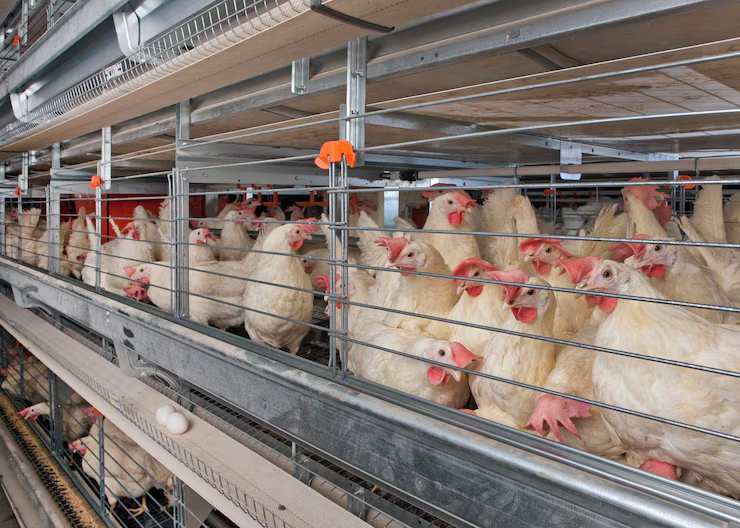
Battery cages are structured housing systems specifically engineered to accommodate laying hens in a confined yet efficient environment. These cages are predominantly used in commercial poultry operations worldwide due to their scalability, ease of management, and cost-effectiveness. Battery cages are the predominant form of housing for laying hens worldwide, providing controlled settings that reduce aggression and cannibalism among hens.
Designed to optimize space utilization, battery cages allow for systematic feeding, watering, egg collection, and waste management. Their structured setup helps poultry farmers manage large flocks with minimal labor while maintaining productivity. Our experts supply both H-type and also A-type structure structures, enabling you to decide on the setup that ideal suits your working criteria.
How Do Battery Cages Contribute to Poultry Health and Productivity?
Battery cages create a controlled environment that significantly reduces hens’ exposure to environmental stressors such as predators, fluctuating weather conditions, and unsanitary surfaces. Low light intensities (e.g., less than 10 lux) are often used to reduce harmful effects of feather pecking, cannibalism, and vent-pecking, which are more prevalent in open housing systems.
Consistent access to feed and water improves egg-laying regularity. Our enclosed systems typically include mechanisms for automatic or manual feeding and watering, ensuring birds receive necessary nutrients without interruption. Waste is efficiently managed using belts or trays beneath the cages, preventing buildup that could lead to disease. Frequent waste removal prevents buildup that can damage cage materials or affect bird health.
Exploring Different Types of Battery Cages for Layer Hens
What Are the Main Types of Battery Cages Available Today?
A-Type Layer Cage Systems
A-type layer cages have a triangular sloped design resembling the letter “A”. They are typically suitable for small to medium-sized poultry farms due to their moderate capacity and simplicity. These systems often consist of 3–4 tiers and use gravity-based manure removal systems to maintain cleanliness.
H-Type Layer Cage Systems
H-type battery cages are stacked vertically in a design similar to the letter “H”. This structure supports high-density poultry farming by maximizing vertical space. H-type systems are preferred for large-scale commercial operations due to their integration with automated systems including feeding, egg collection, manure removal, and climate control.
Single-Layer or Flat Deck Cages
These systems consist of a single level of horizontally arranged cages. They are ideal for small-scale or backyard farming where automation is not a priority. With simpler infrastructure, these cages allow easy manual access for feeding and egg collection but offer limited scalability.
Which Type of Cage Is Most Suitable for Your Poultry Operation?
Choosing the right type of battery cage depends on multiple factors including farm size, available labor, budget, and long-term operational goals. For example, smaller farms might benefit from A-type or single-layer systems due to lower initial investment costs and ease of manual management. In contrast, large-scale farms should consider H-type systems with automation features to maximize efficiency and reduce labor requirements.
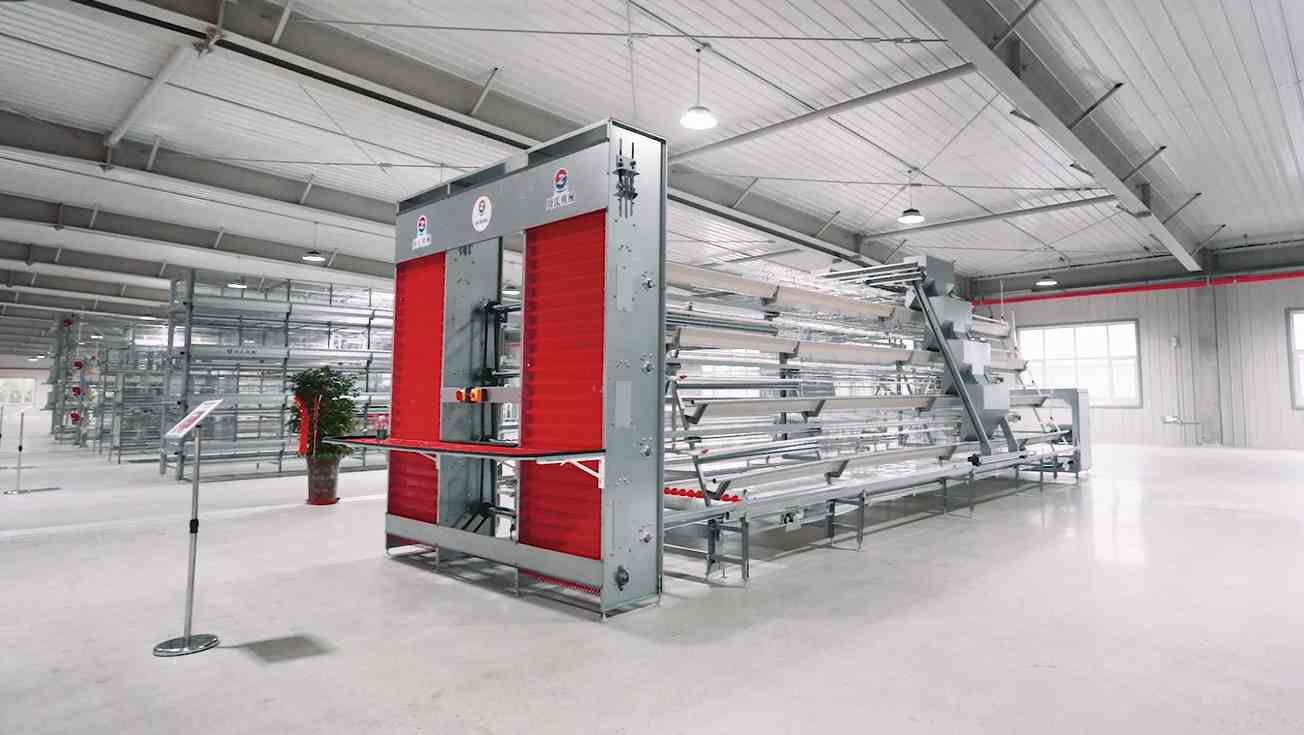
How Does ZEUSYANG’s Battery H-Type Egg Laying Hen Cage Enhance Efficiency?
What Makes ZEUSYANG’s H-Type Cage System Stand Out?
At ZEUSYANG, we design our H-type battery cages with both efficiency and animal welfare in mind. Our 4-layer battery H-type egg laying hen cage with automatic egg collection system is built to support full-scale commercial farming while maintaining optimal living conditions for hens.
With fast, professional, efficient and high-quality service, breeding becomes smarter and simpler. Realize full automation control, greatly reduce the number of operators, reduce labor intensity and improve labor productivity.
Key Features of ZEUSYANG’s H-Type Cages
Advanced Structural Design
Our cage frames are made with hot dip galvanized steel which provides excellent durability and corrosion resistance. Hot dip galvanized surface ensures longevity even under continuous use. Its excellent corrosion resistance and long service life, last 15 – 20 years. The multi-tiered structure allows us to utilize vertical space effectively while maintaining ease of management.
Automation Integration Capabilities
Our systems fully support integration with automation technologies across all critical functions: feeding, watering, egg collection, manure removal, and climate regulation.
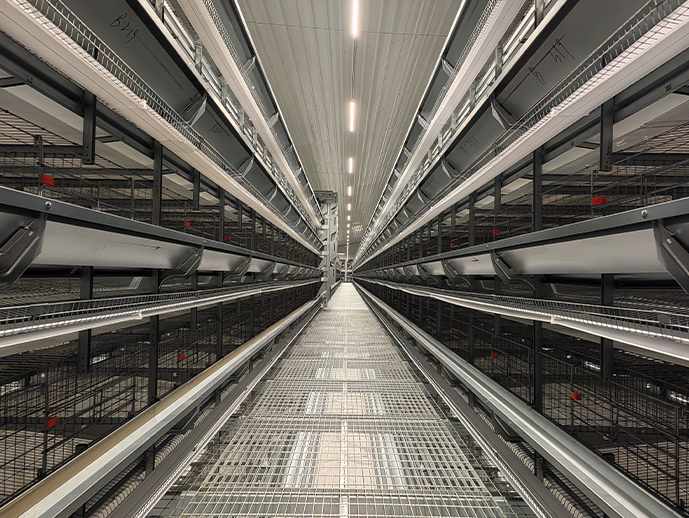
Each cage is equipped with a manure cleaning belt at the bottom, which is clean and sanitary, provides a good living environment and ensures the health of the chickens; Can be equipped with the Internet of Things system to detect environmental information.
Focus on Animal Welfare and Egg Quality
We prioritize adequate spacing per bird to promote movement and reduce stress. Area per chicken: 468.75cm² enhances comfort while our hygienic design ensures cleaner eggs with better shell quality.
Chicken manure is cleaned in layers, which is convenient for collection and centralized treatment. This contributes not only to better egg quality but also helps us maintain low mortality rates within our facilities.
Operational Considerations When Choosing a Battery Cage System
How Do Ventilation and Lighting Affect Battery Cage Performance?
Proper ventilation is essential in any battery cage system as it prevents heat stress and respiratory ailments among hens. Similarly, light management plays a key role in regulating laying cycles. Low light intensities may be associated with welfare costs to the hens as they prefer to eat in brightly lit environments.
Automated climate control systems, like those integrated into ZEUSYANG’s offerings, help maintain optimal environmental conditions consistently throughout the day.
What Maintenance Practices Prolong the Lifespan of Battery Cages?
Regular Cleaning Protocols
Waste must be removed regularly to prevent corrosion and maintain sanitary conditions. Integrated manure belts help facilitate easy cleaning without disturbing the birds. Frequent waste removal prevents buildup that can damage cage materials or affect bird health.
Inspection Routines
Periodic inspections help identify early signs of wear or corrosion in cage structures. Preventive maintenance ensures structural integrity over years of operation. Assembled type, easy and fast installation, reducing surface galvanizing damage, strong and stable.
FAQ
Q: What is the difference between A-type and H-type battery cages?
A: A-type cages have a sloped design suitable for smaller farms, while H-type cages are vertically stacked systems ideal for large-scale operations with higher levels of automation.
Q: Are battery cages still legal in all countries?
A: No, some countries have banned or restricted traditional battery cages due to animal welfare concerns; however, modern enriched or alternative designs like those from ZEUSYANG meet evolving regulatory standards.
Q: How many chickens can be housed in an H-type battery cage system?
A: This depends on the number of tiers and rows; ZEUSYANG’s modular designs can accommodate thousands of birds efficiently while maintaining comfort standards per hen. The cages can reach 8-12 layers, and one chicken house can raise 100,000-160,000 chickens.