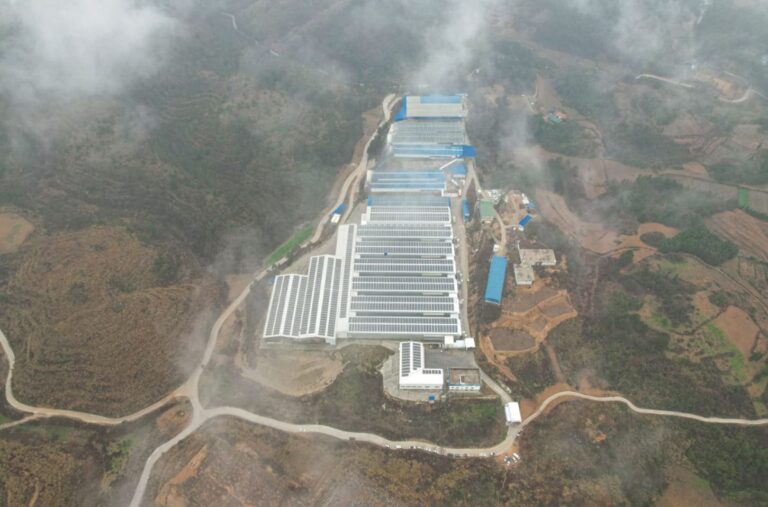

Eight acres of hillside, four houses and 285,000 eggs a day — how a compact site north-west of Beijing turns 300,000 hens into a daily egg supply.
Project at a glance
| Location | Zhangjiakou, Hebei, China |
| Project type | Layer production with on-site egg handling |
| Site area | 8.2 acres (approx. 3.3 ha) |
| Houses | 4 — one rearing house, three layer houses |
| Birds per house | 100,000 |
| Laying flock | 300,000 hens |
| Tier configuration | Five rows × eight tiers (5 × 8) |
| Daily output | 95,000+ eggs per house; approx. 285,000 across the site |
| On-site facilities | Egg store |
| Supply scope | Full-house package — cages, feeding, drinking, egg collection, manure removal, ventilation, environmental control |
Eight acres, cut into a hillside
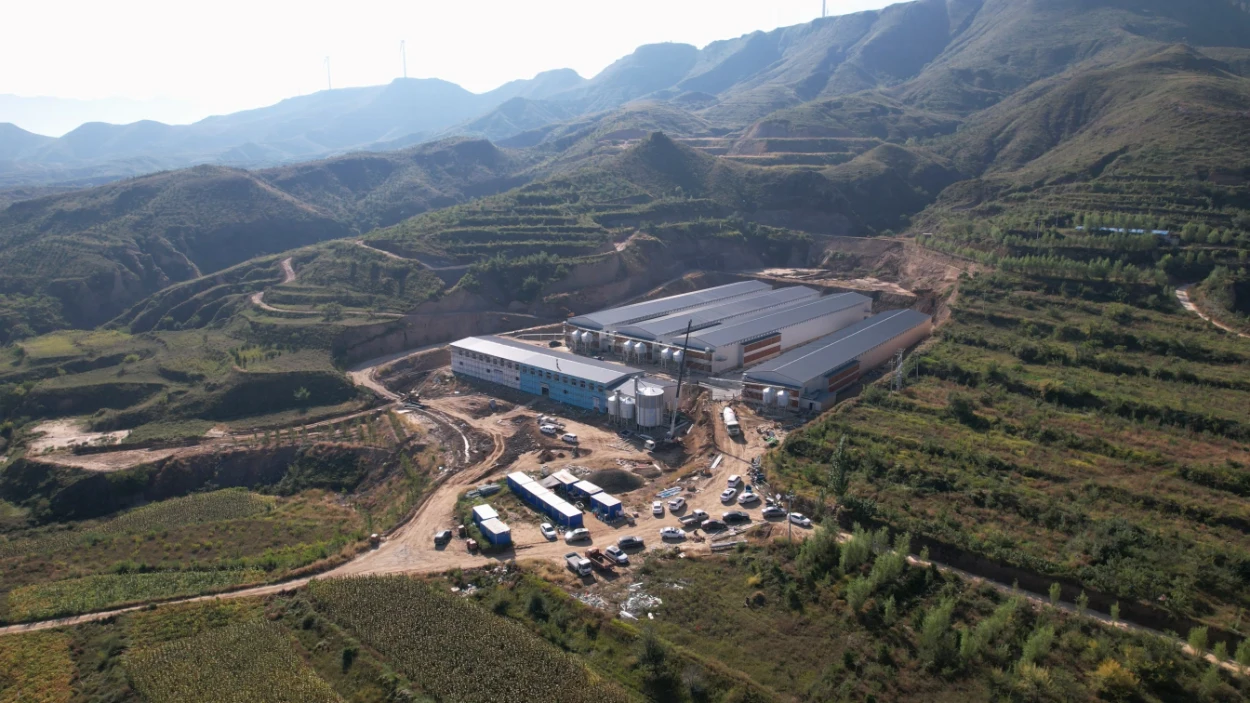
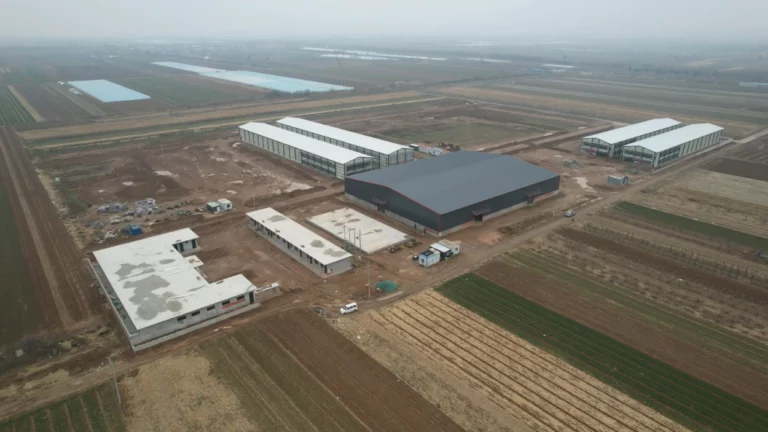
The site does not sit on flat farmland. It is cut into a slope, with terraced hills rising behind the houses and a single access road running down to the entrance. Getting four production buildings and an egg store onto eight acres of that ground took earthworks, retaining walls and a drainage plan before a single bird arrived.
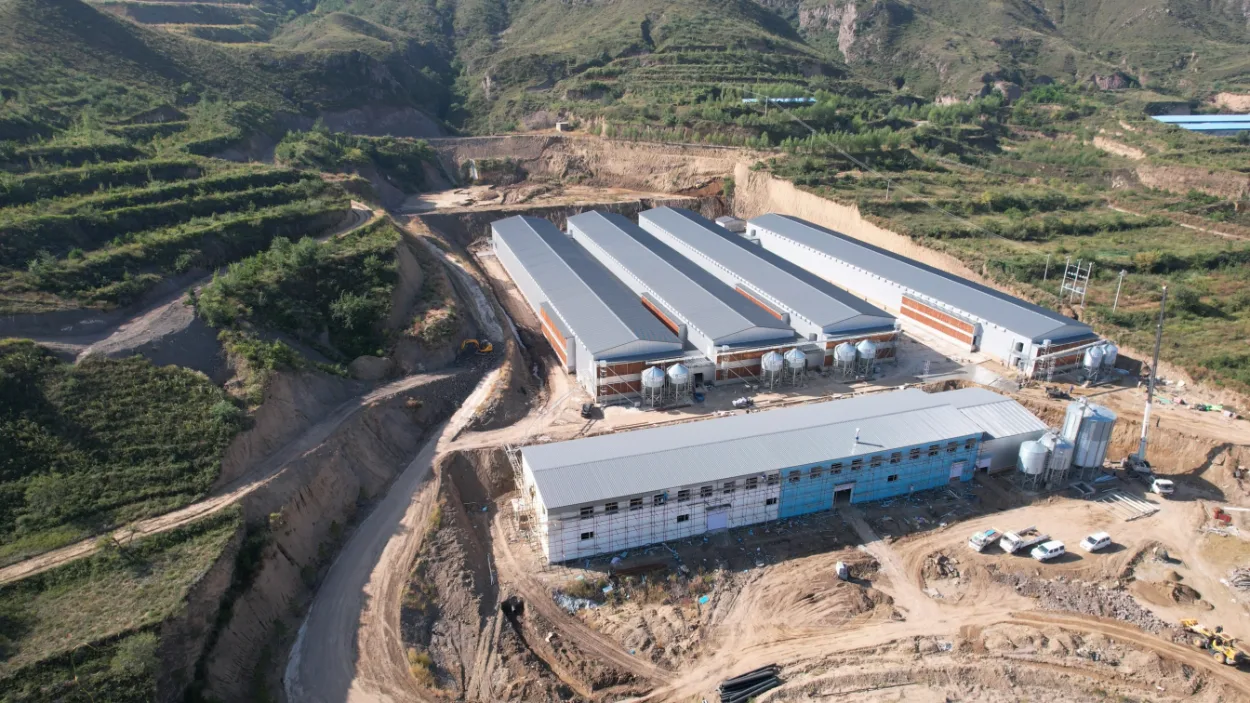
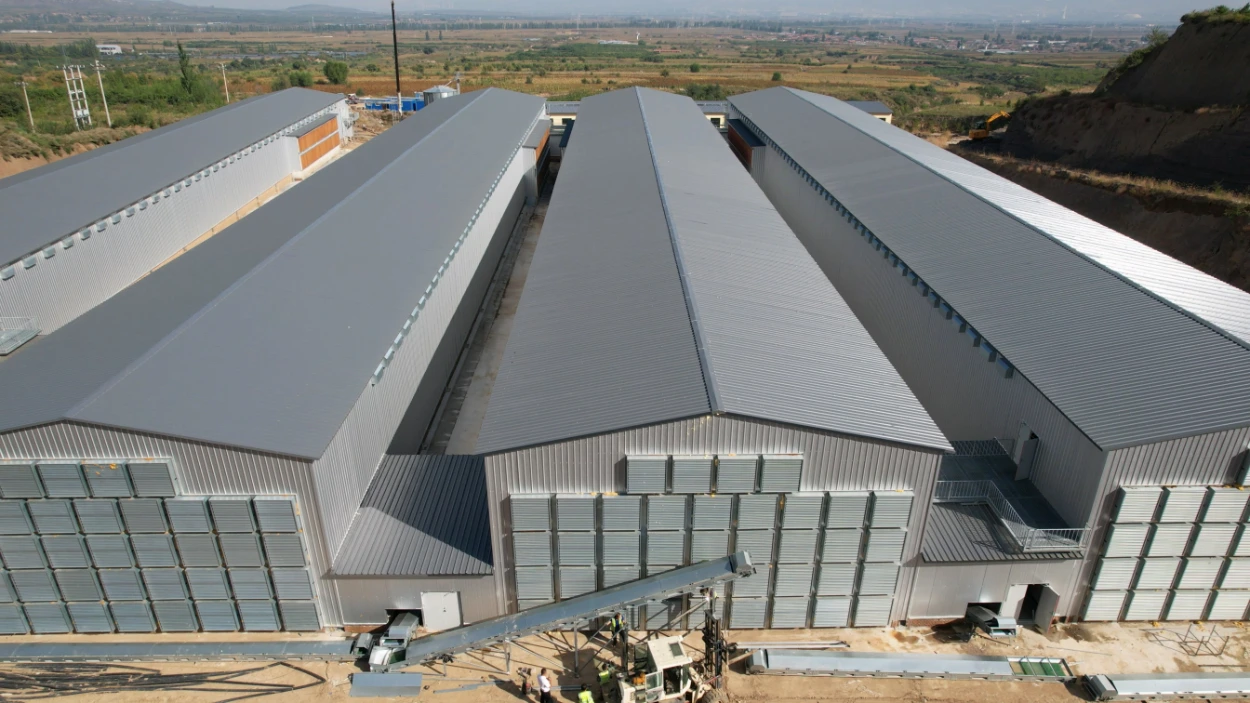
What that buys is compactness: 300,000 hens on 3.3 hectares, roughly nine birds per square metre of site area — buildings, roads, yards and all. The four houses run parallel along the contour, feed silos stand at the gable ends, and the egg store sits at the front of the site where the vehicles come in. Nothing is further from the road than it needs to be.
One rearing house, three laying houses
The four houses are not four of the same thing. One is a rearing house, where pullets are grown to point of lay; the other three hold the laying flock. That arrangement is what lets the site run as a pipeline rather than a single block: pullets are reared on site under their own management, then moved into a layer house at the point of lay, and the rearing house is cleaned and restocked for the next batch.
Because the rearing house holds 100,000 birds and so does each layer house, one batch fills one house in a single move. With three layer houses at different ages, the site is never waiting for a flock and never emptying all at once — there is always a house in peak production, and the egg store has something to pack every morning of the year.
Five rows, eight tiers
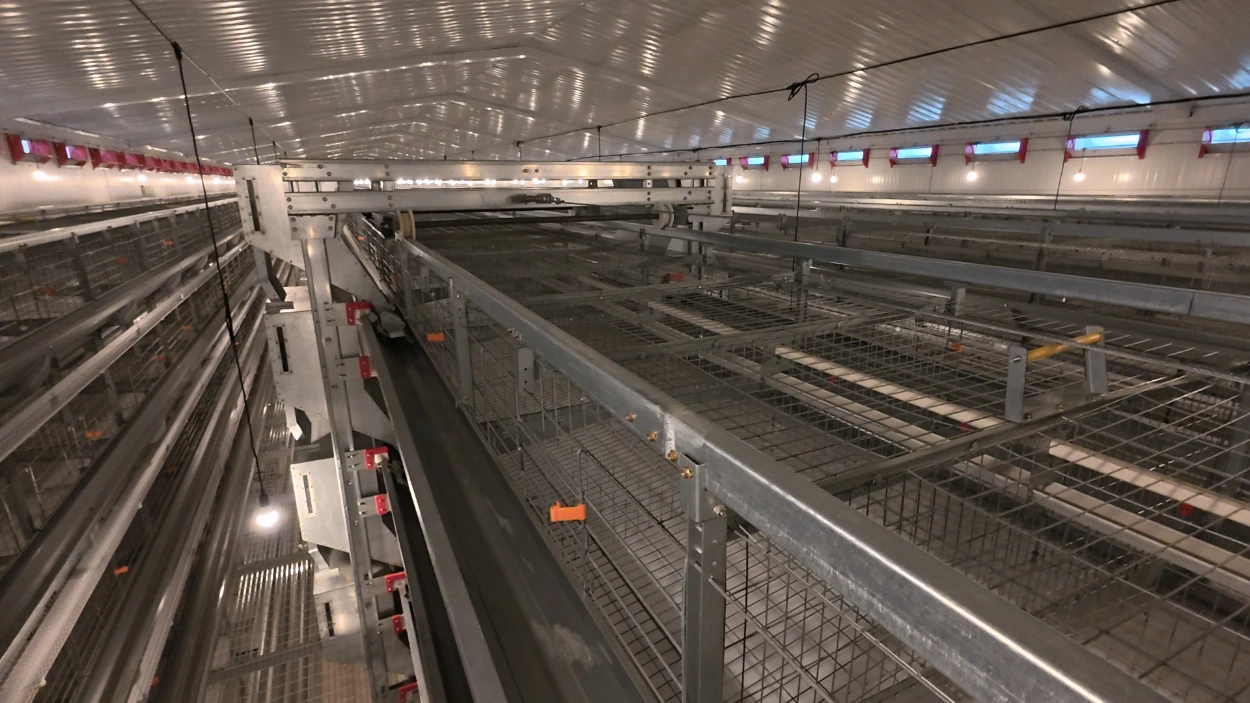
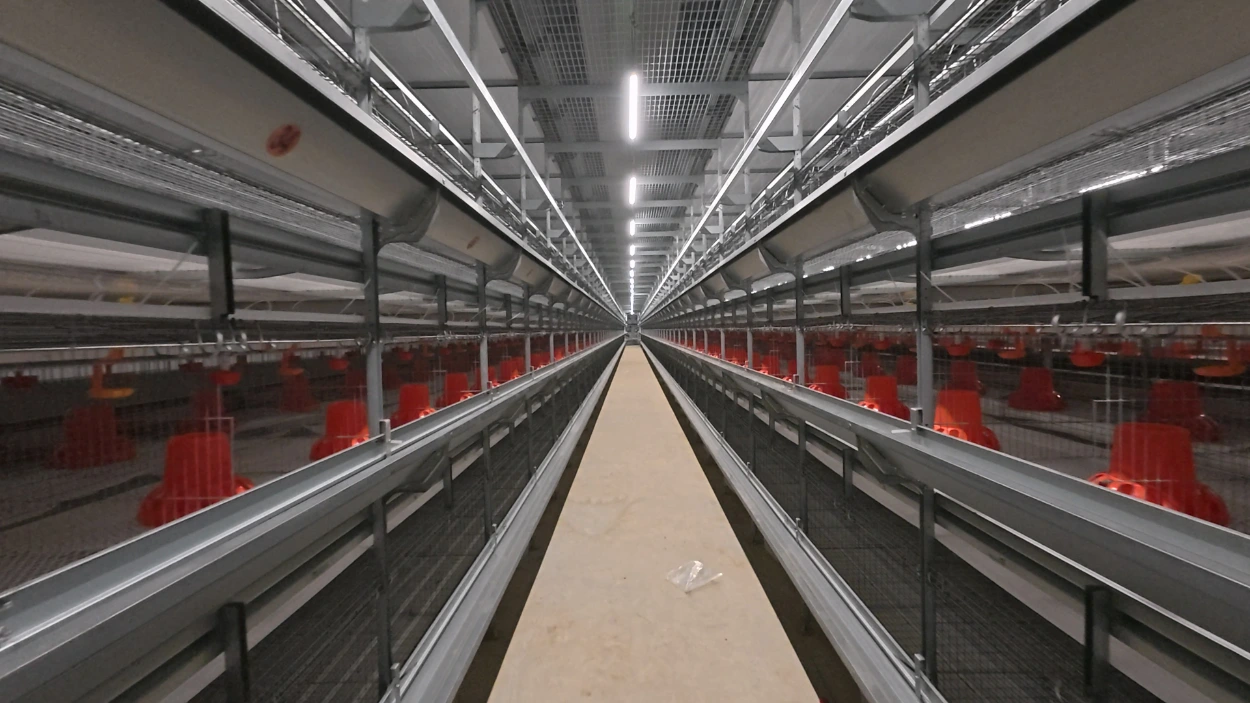
Each layer house holds 100,000 hens in five rows of eight tiers. The rows run the length of the building in parallel, served from the aisles between them, with the tiers stacked vertically to keep the footprint tight. At eight tiers, the practical questions are all about access: how a stockman inspects the top row quickly, how a vaccination crew works a tier, how a belt is changed without scaffolding.
Complete Automated Layer Farming Systems
ZEUSYANG supplied a complete H-type layer system for all four houses — one rearing house and three layer houses — bringing feeding, drinking, egg collection, manure removal, ventilation, cooling, feed storage and environmental control into a single coordinated package.
1. Automatic Feeding System
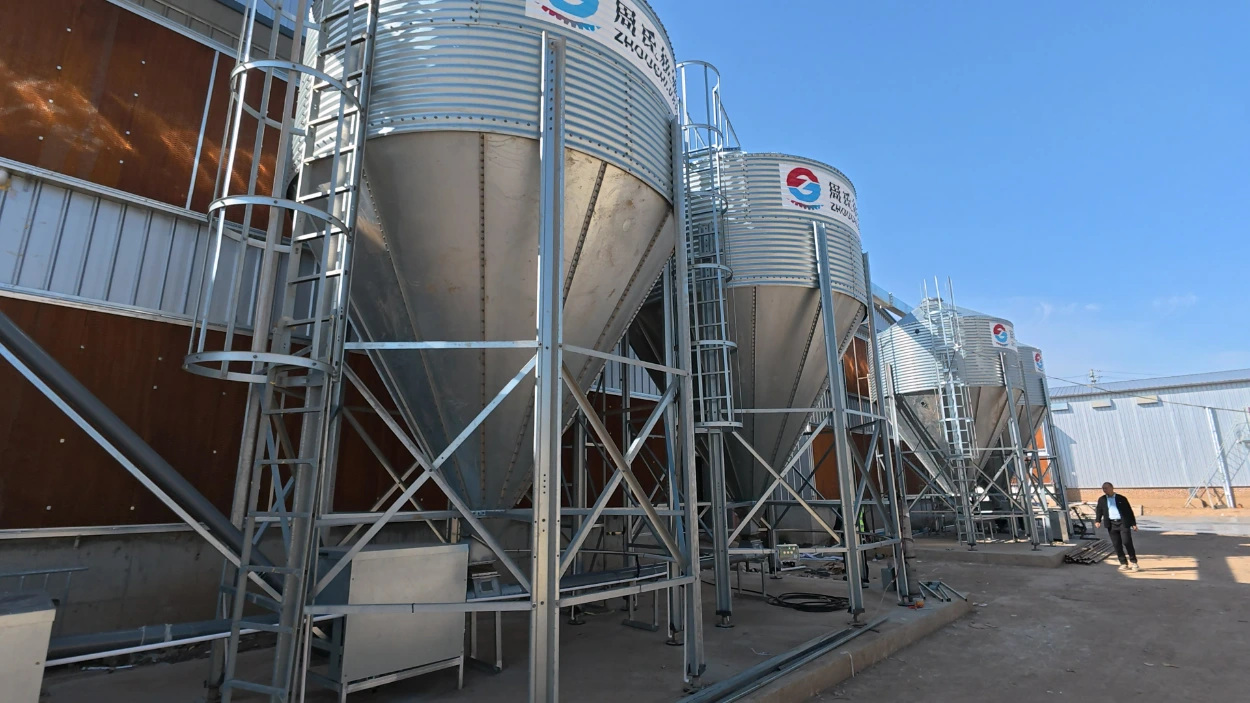
Feed is drawn from the external silos, conveyed into the house and distributed along each tier, so that every row and every tier is fed on the same cycle with the same ration.
2. Automatic Drinking System
Nipple drinker lines on each tier, held at one regulated pressure, give every hen continuous access to fresh water and give the house a metered record of daily intake.
3. Automatic Egg Collection System
In the three layer houses, a belt at each tier carries eggs to the end of the row and onto a cross conveyor, so eggs leave the building without being handled by hand.
4. Automatic Manure Removal System
A belt beneath every tier removes manure continuously, keeping ammonia and fly pressure low and the air in the house dry.
5. Tunnel Ventilation System
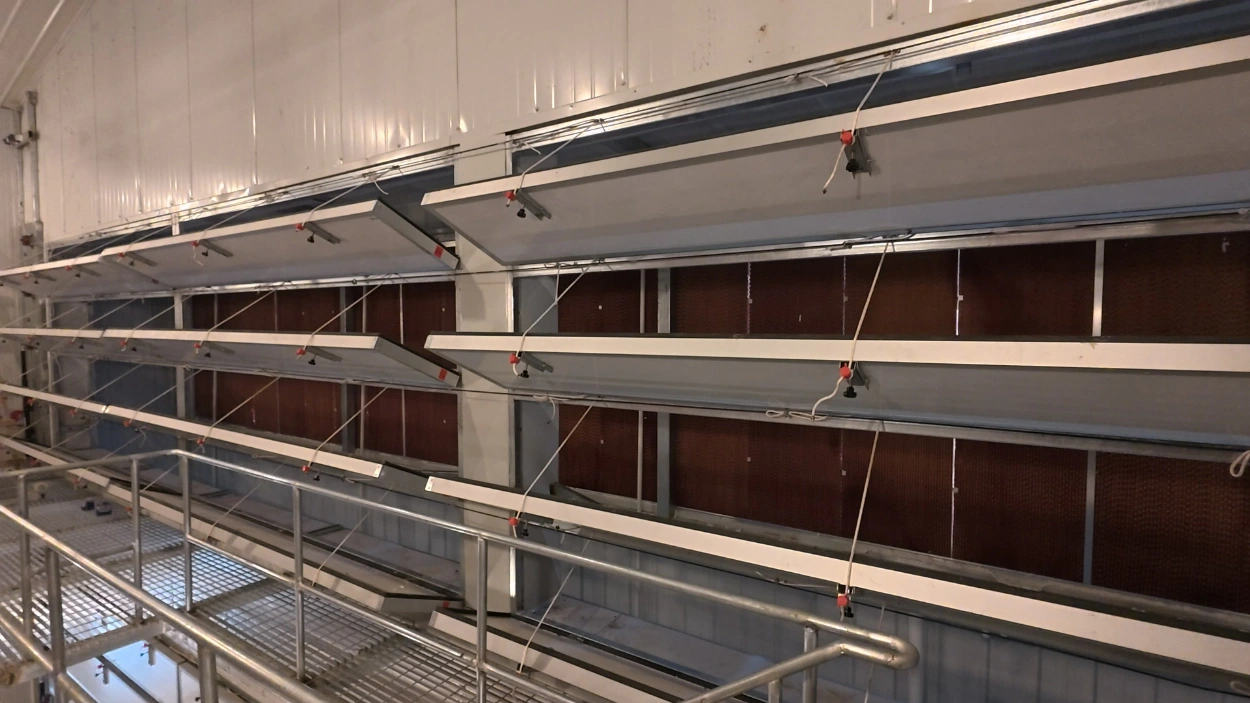
Sidewall inlets and exhaust fans move air the length of the house, holding temperature and humidity steady from the first tier to the last.
6. Intelligent Environmental Control System
A controller in each house monitors temperature, humidity and static pressure, stages fans and cooling automatically, and logs the history of every flock.
7. Feed Silo & Conveying System
Silos at the gable ends store the ration and convey it into the house on demand, so feed arrives without manual handling or a daily delivery run.
8. Egg Conveying & Grading System
Eggs are conveyed from the three layer houses to the egg store for centralised handling and grading, keeping the interval between lay and packing short.
Planning a layer project? Talk to our engineering team about house layout, tier configuration and full-house system specification for your site.