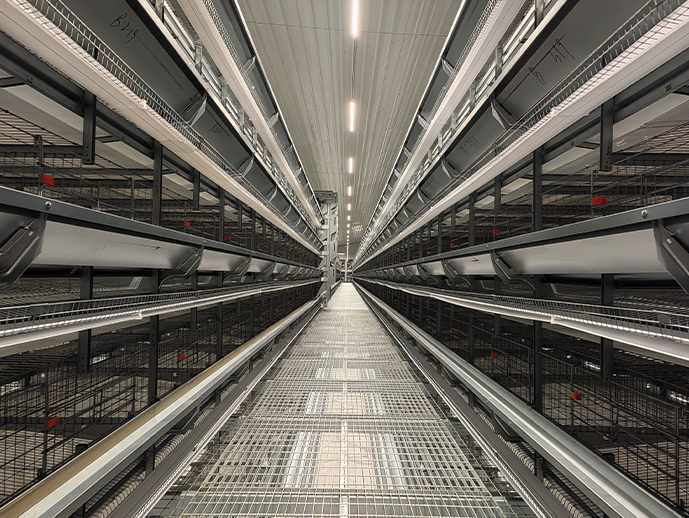

It is a mistake to compare floor housing with chicken cage systems solely on cost, as poultry production performance is determined by a number of factors including bird type, feed, health, environment, management and equipment efficiency. Changes to housing alone will not lead to improved production or reduced production costs. Both housing options must be analyzed using the same flock, house, climate, utilities and labor assumptions.
Start With Farm Requirements Before Choosing Chicken Cage Systems
Which Poultry Production Outcomes Need Their Own Records?
Keep separate records of items such as egg production or broiler growth, feed consumption, water supply to the birds, mortality, labor hours and general flock notes. This will allow you to see the production results and try to find the cause of any changes in production, which could be due to a number of factors, including the birds’ housing, health, nutrition, environment and handling.
What House and Utility Constraints Can Rule Out an Option?
Space is required for birds to feed, to drink, to move about and for collection of eggs or for the harvesting of broilers, depending upon the type of enterprise. Also, a means of service access and of waste disposal must be provided. Cage systems make use of the vertical space available. There must be sufficient clearance between levels and between cages on a level. Aisles between rows of cages must be provided for access by people and by equipment. Ventilation must be distributed throughout the system.
Options require suitable utilities and maintenance access to filtration, adjustable drinker lines, automated feeding, egg collection systems for layers, manure belts, fans and controls. Some options are not practical due to the building or power supply.
Do Chicken Cage Systems Improve Space Utilization?
The flocks can be organized in groups within the cages to have access to food and water as well as to be observed. For layers, this also means egg collection; for broilers, harvest management. Organizing the flocks in groups within the cages can make daily routines easier and make better use of the available space in the house. However, this does not automatically result in higher production efficiency. The production efficiency of the birds is determined by many factors, such as the condition of the birds, health, nutrition, lighting, climate and the daily management on the farm.
Stocking Density, Bird Access and Cage Space
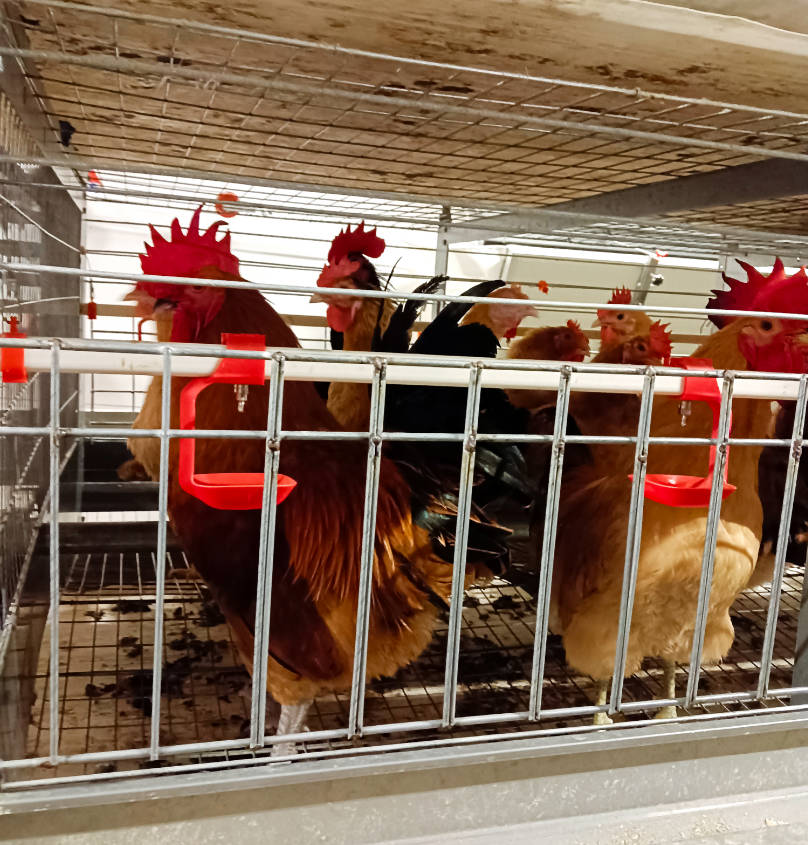
The movement of birds as well as their access to feed and water can be influenced by the cage size and number of birds that are housed together. The design of the doors will also affect the bird handling, inspection and access requirements on a day-to-day basis. The layout must also allow for access to the cages by staff as well as to support the feeding, inspection and bird handling procedures that are planned for the farm.
Just adding space to a compartment does not solve the problems of bad grouping, lack of observation, bad location of feeders and waters. Each component has to have a function.
Why Feed, Water and Climate Control Still Matter
A drinking system consists of a filtration system, a pressure regulator, nipple drinkers, a flushing system and adjustable lines. A feeding system is offered as trolley or chain system and must be checked regularly.
Many factors that affect the environment in cage housing models can also affect the environment in floor housing models, such as ventilation, lighting and climate control. For example, poor air distribution, a hidden leak or unsuitable lighting can compromise the best of design whether in a cage or on the floor.
Egg Collection and Broiler Harvesting in Cage vs Floor Systems
In layer farming, efficient egg collection starts with laying areas that enable effective collection at the right time and with as little contact with manure or soiled litter as possible. For caged laying hens, collection is along a fixed line, whereas for floor-raised layers the egg collecting function is assigned to the nesting areas, which must be monitored on a regular basis. Broilers are compared with regard to the birds’ access, handling and slaughter procedures.
How Do Egg Collection and Broiler Harvesting Routes Change?
In integrated layer cage systems, eggs are moved to a front collecting place or a collecting line in the center of the farm. The design of the collecting system must allow for easy inspection and service access. Monitoring of eggs as well as maintenance of the collecting belts and collecting units is the responsibility of the farm staff.
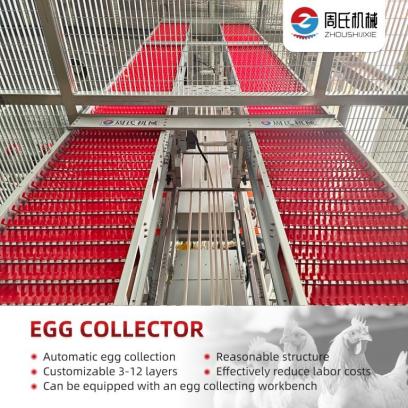
For layer houses with floor laying, egg collection may involve collection from multiple points, including the laying nests and areas where eggs have fallen through the floor. For broiler farms, consideration should also be given to the birds’ movement and the harvesting routes.
Where Do Manure, Litter and Inspection Labor Differ?
The use of a cage system with belts and conveyors to remove waste from within the cage requires careful consideration to align properly, to clean, to drive and to discharge. In contrast, floor housing has different needs with regard to litter, damp areas, replacement and between-flock cleaning.
Both processes need to be inspected. Outline the daily/periodic tasks first and then determine the required personnel.
Which System Uses Labor More Predictably?
Automation does not remove people from jobs but changes them. Apart from egg collection in layer cage systems, the following automation options are available for chicken cage systems: automated feeding and watering, manure removal, automated lighting, climate control and monitoring. Automated feeding and watering in floor keep requiring bird inspection, litter management by staff or automation, as well as egg collection from layers and harvesting of broilers by staff and/or automation.
Routine Tasks: Feeding, Water, Bird Handling and Waste
Identify all individuals responsible for monitoring of feed, water, egg collection, broiler care, manure, ventilation, alarms and bird welfare. Specify frequency of monitoring and time of day.
Automate repetitive routes. Access floor systems directly but conduct wider inspection of automated systems as they can be designed to be ‘fit for purpose’ around specific staff, skills, response times and maintenance arrangements.
Skilled Work: Maintenance, Alarms and Flock Checks
All automated systems need to have regular Preventative Maintenance carried out and will require a supply of spare parts. A basic knowledge of electrical systems and how to respond to alarms and check sensors is also required.
Staff still have to monitor, for example, bird behavior and health problems as well as water, feed, production and environmental issues.
Match the Poultry Housing System to the Farm’s Priorities
Several points can be compared when assessing different types of poultry housing such as: usable space, management of birds, collection of eggs or broiler harvesting, waste, human labor, utilities, technical back-up, local legislation and investment capital required.
When Are Chicken Cage Systems the Better Fit?
Chicken cage systems could be of interest for layer and broiler farms that require organized bird management, efficient use of height, a structured manure exit and automation possibilities. In addition to sufficient height of the house, a suitable width of the aisles, ventilation, power and maintenance possibilities must also be guaranteed for these birds.
Measurement of egg production in layer farms as well as of growth performance in broiler farms has to start after commissioning of the plant. The descriptions of the equipment alone are not able to make promises.
When Is a Floor System the Better Fit?
The floor system may be of interest to layer and broiler producers who want easy access to their birds, flexible housing and people familiar with the litter of their birds. However, adequate space for the birds to move, feeders, waters, ventilation, manure handling and egg collection or broiler harvesting are also required.
Floor labor is less concentrated with mechanically complex tasks but is more distributed across the floor of the plant. The differences in operating costs related to this should also be noted.
Compare Both Options With ZEUSYANG
Cage and floor production concepts of comparable size and scope have been set up. The setups have been developed under the same capacity, house, climate, utility, labor and delivery assumptions. This includes the chicken cage systems for layers and broilers, the feeding and drinking equipment, as well as the egg collection systems for layers. The setups also include the manure removal, lighting, ventilation, controls and monitoring systems. Note that this does not imply any production results.
What Is Included in Our Chicken Cage Configuration?
Our chicken cage systems for layers and broilers can be stacked in various configurations, including designs with trolley or chain feeders and adjustable drinker lines. In addition to the various cage types, the system can also include egg collection for layers, manure removal, lighting, climate control and a monitoring system with alarms. The design of the cage doors and the dimensions of the compartments are adapted to the needs of the bird for handling, inspection and maintenance.
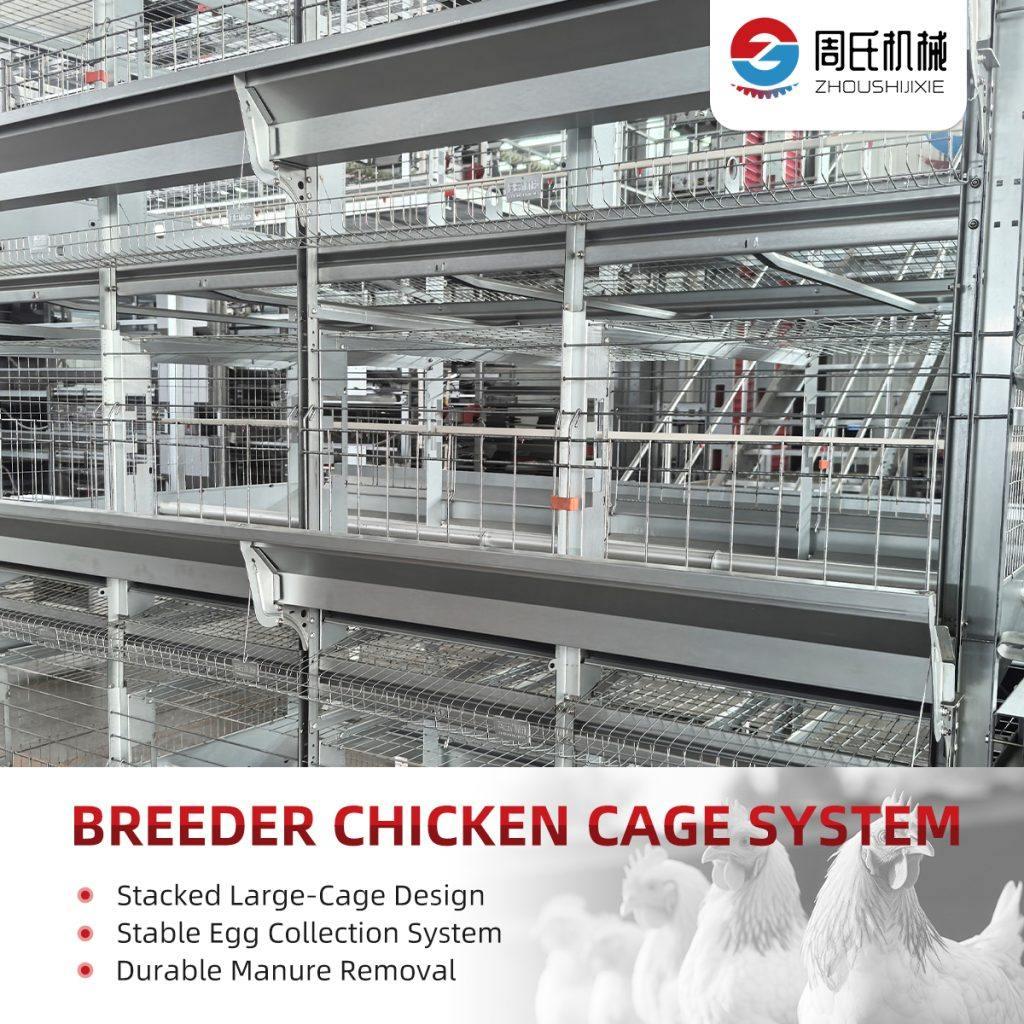
At ZEUSYANG, we define modules, local interfaces, scope of delivery and exclusions in order to allow for a complete comparison of systems offered by the buyer.
How Do We Build a Comparable Floor-System Brief?
For floor-housing, we have made similar assumptions and laid out the feeding and drinking space as well as optional slats, egg collection for layers and the broiler harvesting area. Further aspects such as ventilation, cooling, lighting, control systems, manure paths and staff paths are shown and should correspond to the management capacity of the farm.
FAQ
Q: Do chicken cage systems guarantee higher production efficiency?
A: No. Cage systems can support efficient poultry production, but actual performance depends on bird type, stocking density, feed, health, nutrition, lighting, climate and farm management.
Q: Which system is easier to manage, cage housing or floor housing?
A: Cage systems can provide organized feeding, watering, manure removal and inspection routes, especially when automation is installed. Floor housing offers direct access to birds but requires regular litter management and wider inspection. The easier option depends on farm size, staffing and equipment configuration.
Q: Does automation eliminate farm labor?
A: No. Even though automated farm equipment can repeat movements over and over, farms still need to have things like inspection, maintenance, records, alarms, and flock care monitored by a trained supervisor.
Q: What information should a buyer send to ZEUSYANG for a quotation?
A: Bird type (layers or broilers) and capacity, house and site details, climate information, utilities, labor assumptions, preferred automation level, egg collection or broiler harvesting arrangements, manure removal routes, local requirements and scope of delivery.