
Starting a poultry farm in 2026 does not have one reliable global price. A sound budget depends on the country, site, bird type, housing method, automation level, freight, utilities, and delivery scope. The useful comparison is therefore not a single price per bird, but a complete list of cost categories for 10,000, 50,000, and 100,000 birds. Buyers can then request like-for-like quotations and add local construction, operating, and financing costs. This approach prevents an inexpensive equipment-only offer from being mistaken for a commissioned commercial farm.
What Must a Poultry Farm Startup Budget Include?
A complete budget separates fixed infrastructure from production systems. Land purchase may be excluded when the owner already controls a site, but preparation, roads, drainage, fencing, biosecurity access, and utility connections still need line items. House construction and equipment should be quoted separately.
Site, House, Utilities and Backup Power
Planning a site budget begins with land surveys and earthworks. Next, you must include foundations, solid floors, and structural framing. Roofing and necessary insulation are also key parts. Finally, drainage systems and service zones add to these initial costs. Steady water and power supplies act as vital resources. They are never just minor extra costs. Buildings with mechanical ventilation require a clear backup power strategy. This is because cooling fans and water systems rely entirely on continuous electricity. Feeders and control boards need this power to function properly, too.

A project designed for 10,000 birds might operate within a single building. Alternatively, it could use just a few small production units. Scaling up to 50,000 or 100,000 birds changes the overall layout. At this size, internal roads and bulk storage for feed and water need careful planning. Electrical distribution and daily manure handling demand extra attention. Furthermore, keeping flocks apart and organizing staff areas will take much more coordination. You must always review local building codes first. Regional climate loads and strict biosecurity rules are just as important. Check all these details closely before you finalize any structural costs.
Automatic Poultry Farm Equipment: Cages, Feeding, Drinking and Environmental Systems
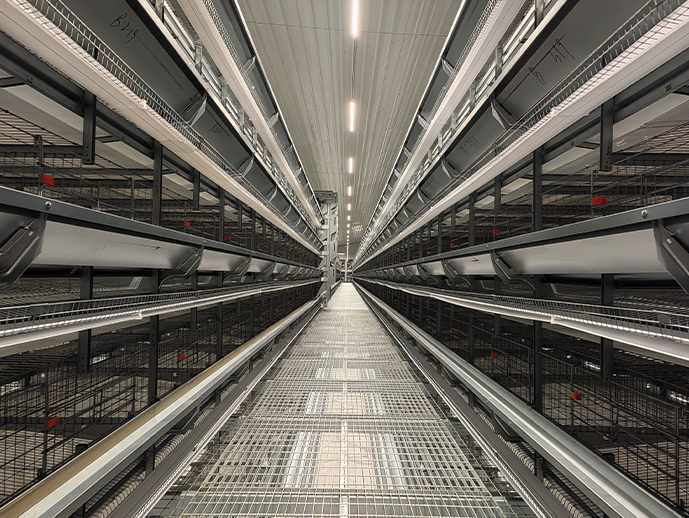
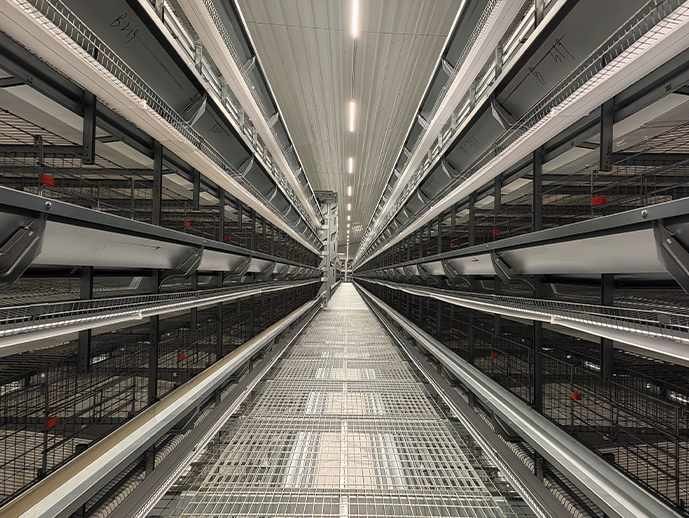
The equipment package may include cages or floor-rearing equipment, feed storage and delivery, drinker lines, ventilation, cooling, lighting, environmental controls, manure handling, and egg collection for layer projects. A feeder system in a poultry farm must be selected together with storage, delivery lines, access, and power requirements. Likewise, the poultry farm feeding system cannot be priced responsibly without the house length, number of rows, bird type, and intended automation level.
Quotes should identify every included module. A low initial figure may exclude controls, wiring, installation, commissioning, spare parts, or local interfaces. Manual, semi-automatic, and automatic packages therefore need separate scopes rather than a single headline number.
How Do 10,000-, 50,000- and 100,000-Bird Projects Scale?
Costs that repeat with every house or row tend to rise with capacity, while design, storage, and control infrastructure may be shared. However, a 100,000-bird project is not simply ten copies of a 10,000-bird unit. Larger projects need more coordination of houses, power, water pressure, feed logistics, alarms, manure routes, and commissioning.
What Changes at 10,000 Birds?
At 10,000 birds, the buyer first chooses the production model and defines what must operate automatically from day one. Chicken cages for poultry farming may reduce the building footprint compared with a floor system, but cage arrangement, access aisles, ventilation, manure handling, and local welfare requirements all affect the final layout. The selected poultry farming equipment should match the bird type instead of being treated as a generic package.
The project can sometimes phase nonessential automation, but water delivery, adequate feeding access, environmental control, and a workable waste route cannot be postponed. The quotation should also state whether the house structure, electrical work, freight, erection, and operator training are included.
Why Do 50,000 and 100,000 Birds Need More Coordination?
At 50,000 birds, the design may require several houses or equipment rows with shared feed, water, power, and controls. At 100,000 birds, redundancy matters more because one utility or control failure can affect a larger flock. The required automatic equipment used in poultry farming must be planned as connected systems.
A larger poultry farm cage system also changes the service routes for feed delivery, egg movement, manure removal, maintenance, and emergency access. The poultry farm cage design should be coordinated with house width, height, ventilation paths, structural loads, and installation sequence. These interfaces add engineering and commissioning work even when the equipment rows are repetitive.
Which Costs Are Commonly Missing From a Startup Quote?
Commercial comparisons often fail because one supplier quotes equipment at the factory while another quotes delivered and installed systems. Buyers should normalize the scope before comparing totals. Currency, taxes, duties, inland transport, site lifting, accommodation for installers, electrical interfaces, and civil modifications may all sit outside an equipment price.
Poultry Farm Machinery: Freight, Installation, Commissioning and Spares
For imported equipment, the landed cost can include export packing, ocean or road freight, insurance, customs charges, port handling, and transport to the site. Installation may require local labor, lifting equipment, electrical technicians, and temporary services. Commissioning should confirm that feeding, drinking, manure, egg, ventilation, and control modules work together.
An initial spare-parts package and preventive-maintenance plan should also be budgeted. Buyers need to know which technical support is remote, which support is on site, and which travel expenses are excluded.
Working Capital, Biosecurity and Contingency
Construction and equipment are only part of the startup requirement. The cash plan may also cover birds, feed, bedding where applicable, labor, energy, veterinary and biosecurity inputs, insurance, cleaning materials, and maintenance before the first stable revenue cycle. These items should remain separate from capital equipment so financing needs are visible.
A contingency allowance is project-specific. It may need to absorb site discoveries, utility upgrades, currency changes, shipping delays, or specification revisions. No universal percentage can replace a local risk review.
Build a Project-Specific Cost Brief With ZEUSYANG
ZEUSYANG develops project scopes from poultry type, capacity, land, house dimensions, climate, utilities, labor, investment, and management requirements. We use those inputs to coordinate housing and automation instead of applying one standard price to every market. Our scope can cover layout, house design, equipment selection, installation guidance, commissioning, and technical support.
What Inputs Do We Need Before Quoting?
For a useful project quotation, we need the bird type, production goal, capacity per house, land, house dimensions, climate, power and water information, automation level, and destination. Buyers should state whether the request covers equipment only, supervision, installation, commissioning, steel structures, or a broader package.
These inputs let our team separate mandatory systems from optional modules and identify local-contractor interfaces.
How Do Our Cage and Automation Options Change the Scope?
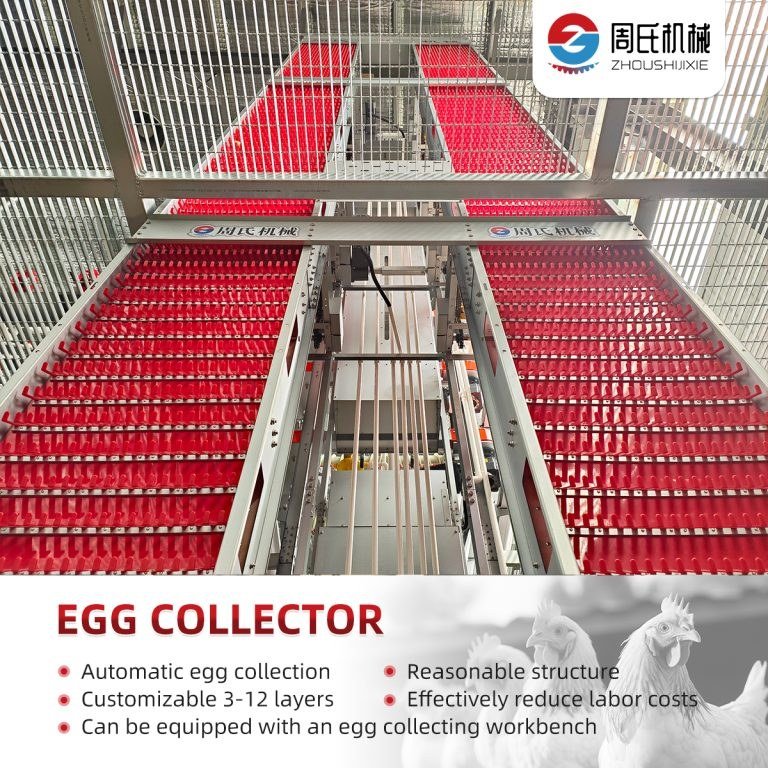
Our cage configurations can be paired with feeding, drinking, egg collection, manure removal, lighting, ventilation, cooling, environmental control, and monitoring systems. A layer poultry farming cage design must coordinate tier selection, service aisles, egg routes, manure conveyors, water-line access, and airflow. We can also adapt the poultry farm cage system to the house and selected automation level.
The final cost is a configured quotation, not a published global rate. A detailed schedule, responsibility matrix, and exclusions are more useful than an unsupported per-bird promise.
FAQ
Q: Can one global price be used for a 10,000-bird farm?
A: No. Structure, climate control, labor, freight, duties, utilities, bird type, and automation differ by location. A site-specific scope is required.
Q: Does automation always lower poultry farm equipment cost?
A: Automation usually raises initial capital cost and changes labor and maintenance requirements. The commercial result depends on local wages, energy reliability, management, utilization, and production performance; it should not be assumed in advance.
Q: Why does cage design affect the budget?
A: Tier count, row length, house geometry, feed and water delivery, manure removal, egg collection, ventilation, controls, and installation access all change equipment quantities and interfaces.
Q: What should a buyer send for a comparable poultry farm equipment quote?
A: Send flock type, capacity, house and site information, climate, utilities, automation expectations, destination, and the required delivery scope. ZEUSYANG can then prepare a defined package with inclusions and exclusions.