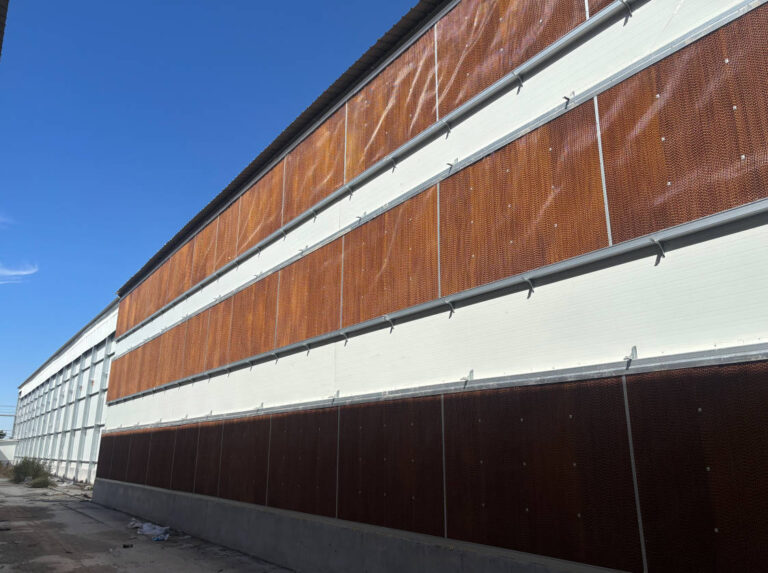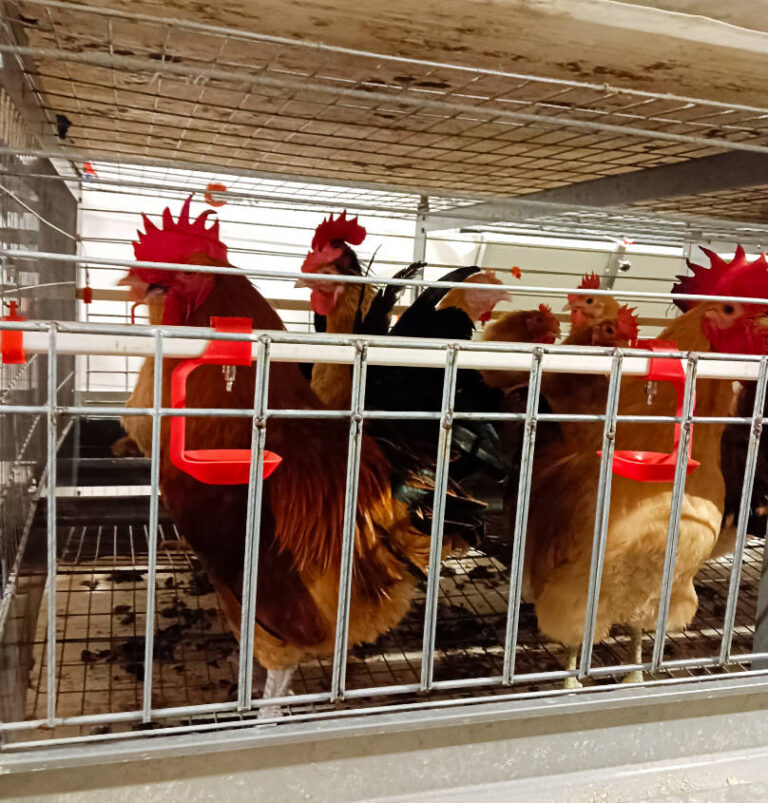

The cage arrangement helps separate work.
A useful disease-control review follows the work routes through the house.
Walk every route through the H-type layer cage farm
Use chalk or a printed plan during the walk. Trace staff entry in one color. Add feed delivery, clean eggs, dead birds and manure in other colors.
Do the same exercise around the row ends of the H-type layer cage system. A mechanic carrying a drive should have a workable path.
Tell visiting technicians which entrance to use when the appointment is booked.
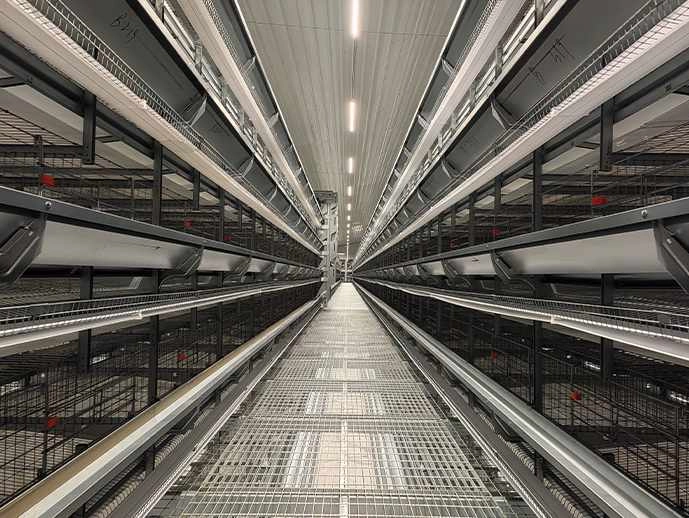
Leave the display and look along the tiers
Note dust on one bay, condensation on steel, a draft at bird level or hens avoiding a section. Write the position beside the controller reading.
One weak part can disturb only a small zone of the poultry climate control system. Check the nearby inlet, shutter, fan belt, pad and sensor. ‘Row 2 / tier 6 / exhaust end’ is a useful note. ‘House hot’ is not.
Finish the water round at the final nipple
Follow the poultry drinking water system in its operating direction: supply, treatment, filter, regulator, pipe, flush point, then line end. Take the end reading while demand is meaningful, not only in an empty-house test.
Treat the meter as a question. More water than yesterday? Look for heat and leakage. Less? Check supply, pressure, blocked drinkers, feed use and the birds themselves. Avoid a house-wide adjustment until the location of the trouble is known.
When one belt is wet
Find the first wet patch. Inspect directly above it, then compare the next few cages. Correct nipple leakage, line height or local pressure as appropriate. Return later and record whether the patch has begun to dry.
Do not stop at the manure outlet
Before a belt run, confirm that the cross conveyor and pickup are available. Watch the scrapers and tracking during startup. Afterwards, inspect the outside discharge. Clear dropped material and water there; do not leave an easy meal for flies, rodents or wild birds.
Put vehicle arrival, storage capacity and treatment into the same schedule. Also check the local requirements for handling and final use. A full store or missing vehicle turns an apparently routine belt run into a house problem.
Use a handover note that another person can act on
At handover, write one line: exact cage, observed change, work completed, and the time of the next check.
Cleaning procedures, disinfectant choice and contact time should follow the farm veterinarian’s program and the product label.
Test the farm on a difficult day
Choose a warm shift for an outage drill. Let the alarm travel through the real call chain. Start the priority ventilation and water equipment in the agreed order.
The poultry farming equipment range can be reviewed with ZEUSYANG before installation. Send the building size, climate, flock plan, utilities, staffing and manure route through the project contact page.
Treat a repair as a movement through the farm
A repair has its own traffic pattern. Before work starts, note the entrance and the row. Then ask two plain questions: what is coming into the house, and what must leave? A ladder and a wrapped bearing need different handling from a dirty motor or a used belt.
Close the job at the house boundary, not at the start button. Used parts leave by the agreed route. Tools go back to the wash point. Packaging does not stay beside the panel. If a technician crossed into another farm zone, put the crossing in the shift note. This takes a minute and keeps tomorrow’s team from guessing what happened.
Start an air check in the bay that looks wrong
Suppose hens leave a section of an upper tier. Stay in that section first. Compare it with the cages on either side. Is the inlet angle different? Does light show around a door or cable opening? Is the nearby fan sound steady? Only after those checks should a whole-house setting become the main suspect.
Change one item. Return to the same bay after the air has had time to respond. On the shift sheet, use a location such as ‘Row 3, tier 6, third bay from exhaust.’ Add the time and what the hens did after the change. That note lets another person repeat the check without hunting for the original spot.
Give the sensor a marked home
Follow a water clue until the belt dries
Begin at the first damp cage. Check the nipples directly above it, then the line height and local pressure. Water may run along metal before it reaches the manure belt, so inspect beyond the obvious drip. Make one correction and write the time on the line sheet.
Come back during the shift. Is the belt beginning to dry? Has water use returned toward its usual range? If the same place becomes wet again, move the issue from a one-off repair to a line review. Component wear, pressure practice, and line support may all deserve attention.
Build cleaning around the machine
First take away loose material with the method approved for the house. Do not wash feed, feathers, and manure deeper into a guard or electrical area. Identify parts that must stay dry before hoses arrive. The local list can name them: drive motor, bearing, sensor, panel, and any other protected component in that installation.
Afterward, walk the water rather than only the cleaned surface. Where did runoff collect? Did it cross the boot-change line or pool near the manure outlet? Once the area is dry enough, look under drives and behind removable guards. Put any missed place on the next cleaning sheet by name.
Use the emergency drill to find ordinary defects
Run the drill with the people and telephone used on that shift. Let them find the panel in the available light. Let the backup supply start the actual priority circuits. Someone should read the tank and fuel level during the exercise, not copy a number from the emergency plan.
Finish with a work list. Battery: replace. Valve label: print again. Box in service aisle: move. Old telephone number: update. Give each line a name and date, then repeat the affected step. Run the exercise again after a layout change or staff turnover, because both alter how the written plan works in practice.
FAQ
Q:Can an H-type layer cage farm eliminate disease risks?
A:No. The cage arranges equipment; the farm health program covers vaccination, veterinary work, cleaning, and entry control.
Q:How many temperature sensors does an H-type layer cage system need?
A:No single average describes every tier and row. Check the flock area at several heights and locations.
Q:What should a layer cage farm check after water use changes?
A:A house walk. Look at weather, leaks, pressure, feed intake, recent work and flock condition before changing settings.
Q:How often should manure belts run in an H-type cage system?
A:Moisture and flock load matter, but the cross conveyor, pickup, storage and treatment route must also be ready.