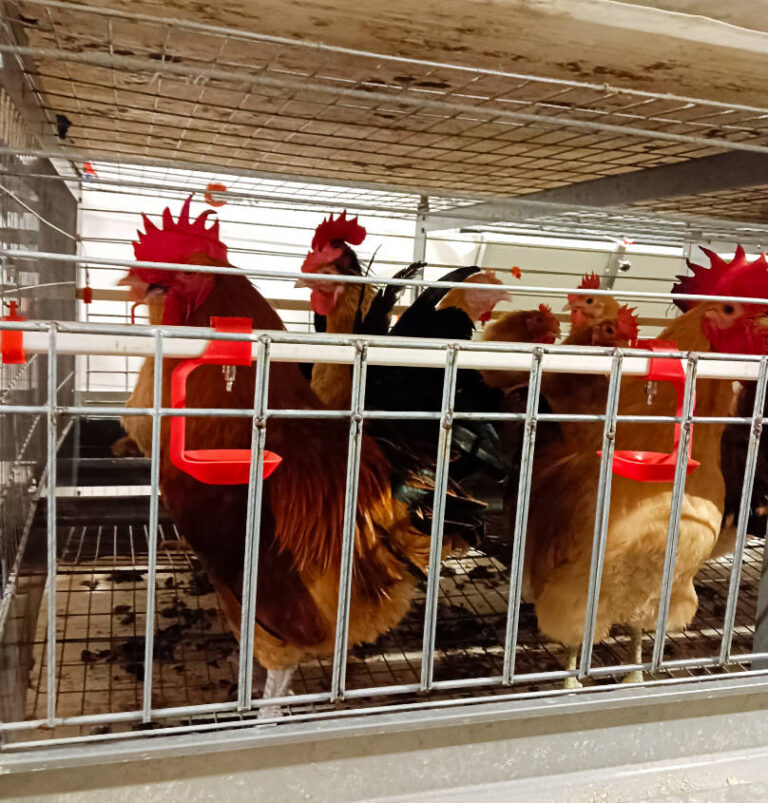

For deep litter houses there is no one airflow for ventilation of the birds. Airflow changes with bird type, bird age, bird number, weather, house size, insulation, leakage, litter moisture and heat produced by the equipment in the house. The rated capacity of fans does not guarantee that fresh air will actually reach the birds or the wet floor areas. The operating modes of ventilation have to be calculated for the respective house, the inlet has to be checked against the outlet, and the function must be tested during the commissioning of the house.
Why a Deep Litter House Has No Single Airflow Number
Ventilation must supply fresh air, remove moisture and gases, keep suitable temperatures and must prevent stagnation. Deep litter poultry farming is in constant change due to the growth of the birds and the influence of the weather. Therefore one constant fan setting is not sufficient.
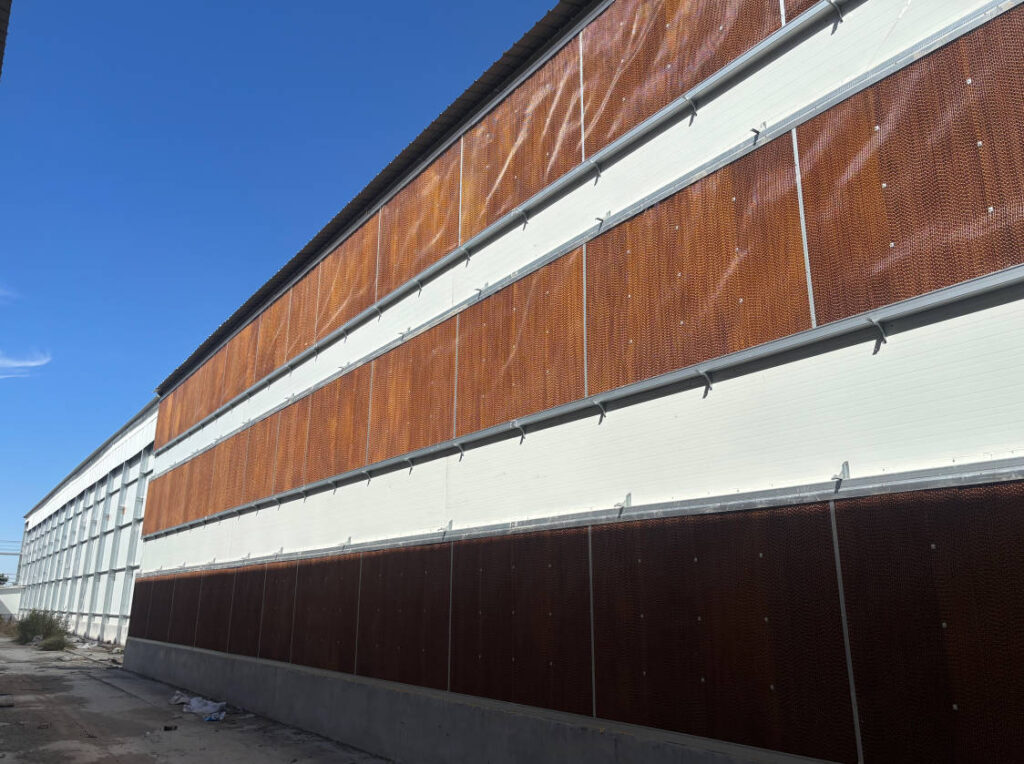
Bird Load, Age, Weather and House Resistance
The load from birds increases with their growth and contains heat and moisture. The influence of outside conditions on the ventilation is whether it is supposed to regulate moisture, temperature or both. The resistance to the flow of air is influenced by the house geometry, the insulation, the inlets, the screens, the shutters and the leakage.
Feed and water lines, building partitions and stored materials can obstruct both floor-level airflow and service access. Do not size ventilation from bird counts alone; use the actual building layout.
Minimum, Transitional and Hot-Weather Ventilation
In cool weather minimum ventilation is continued for moisture and air-quality control. Transitional and hot-weather modes are added to increase capacity as necessary. The transition points must be determined by project calculations.
Many factors including water leaks, weather changes and equipment failure can affect a job site quickly. The operator needs to know what each stage of control corrects.
Airflow Must Reach Birds and the Litter Surface
Air enters through designed openings, mixes within the occupied space, passes through problem areas and then exits through the exhaust. It is possible for short-circuiting to occur and air to travel from the inlet to the fan rather than penetrating other areas of the space.
How Should Air Move Through the Poultry House?
The inlet opening size, direction and pressure will determine how far the incoming air jet travels before descending. Even with extraction fans, air can ‘leak’ round obstacles such as doors, while curtains or other obstructions may prevent it from reaching part of the house.
Plans for deep litter poultry systems need to describe entrance routes, internal routes and exit routes. Suitable commissioning methods need to be described allowing distribution to be checked by suitably trained personnel under local safety rules.
What Creates Dead Zones Near the Floor?
There are many potential ‘dead zones’ in a room including behind equipment and partitions, and where there are uneven inlets to the room, or where walls have been blocked. The roof air may well be mixing but the air at floor level is not moving. A patch of wet litter and associated odour could indicate a problem with distribution rather than failure of the room’s total capacity.
Assess conditions near drinker lines, corners, end walls and between zones. Clear any blockages before deciding a larger fan is required.
Use Moisture, Odor and Bird-Level Conditions as Feedback
Examples of signs to monitor for air movement include: Litter condition, condensation, odor, dust, bird distribution, temperature patterns, and water use. These signs will guide the inspector but will not replace calibrated testing instruments.
Advantages of deep litter systems depend on good moisture management and workable bedding. These are influenced by a number of factors including ventilation, water, drainage, stock density and management.
Why Wet Spots and Water Lines Matter
Wet spots near drinkers are usually the result of a leak, excess pressure, wrong line height, a faulty nipple or over flushing. In these cases, more air exchange does not solve the problem. Drinker systems require a filter, a pressure regulator, flushing points and a height adjustment.
The advantages of deep litter system in poultry depend on coordinated water and air management. Map recurring wet areas against line position and airflow.
Fan Staging, Sensors, Alarms and Backup Power
Environmental controllers can stage fans, inlets and evaporative cooling. Place and calibrate temperature, humidity and other relevant sensors in representative locations. Alarms need to trigger action by staff.
Dependent houses require a backup supply and an emergency ventilation system. Test all fans, shutters, controls and generators on a regular basis.
Battery Cage vs Deep Litter System Ventilation
All of these systems place birds, manure, water, and other obstructions somewhere along the path of air movement. In cage houses, birds are distributed up and down through the structure of the house. In floor houses, all of the birds and manure and litter are concentrated at the ground surface of the house. Moisture and obstruction patterns will therefore differ between the two types of houses.
How Do Moisture and Manure Loads Differ?
Comparing deep litter systems to battery cage systems, the main consideration for floor housing is to monitor the moisture content of the bedding. Manure belts in cages change the manure flow and tiered housing affects the airflow resistance and distribution vertically.
Do not use previously assumed fan settings without verifying the upstream geometry, bird distribution, inlets, equipment resistance, etc. and associated waste routes.
What Should an Airflow Diagram or House Picture Show?
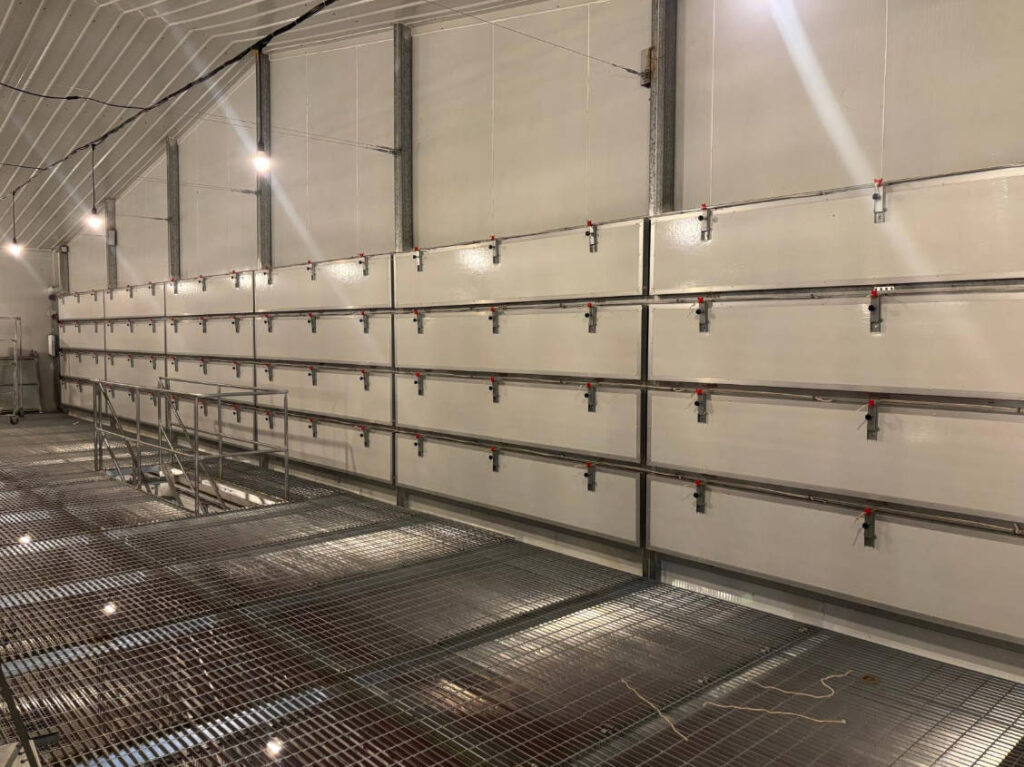
An image of the deep litter system in a poultry house should help identify air inlets, exhaust fans, airflow paths, bird occupancy areas, litter zones, feed and water lines, dividers, sensors, and control points. An image that only displays the appearance of individual equipment without showing the connections between components cannot count as a qualified airflow plan diagram.
The diagram must also mark service access passages and backup configurations, so that all components can be presented as a complete interconnected system.
Plan Deep Litter Ventilation Equipment With Us at ZEUSYANG
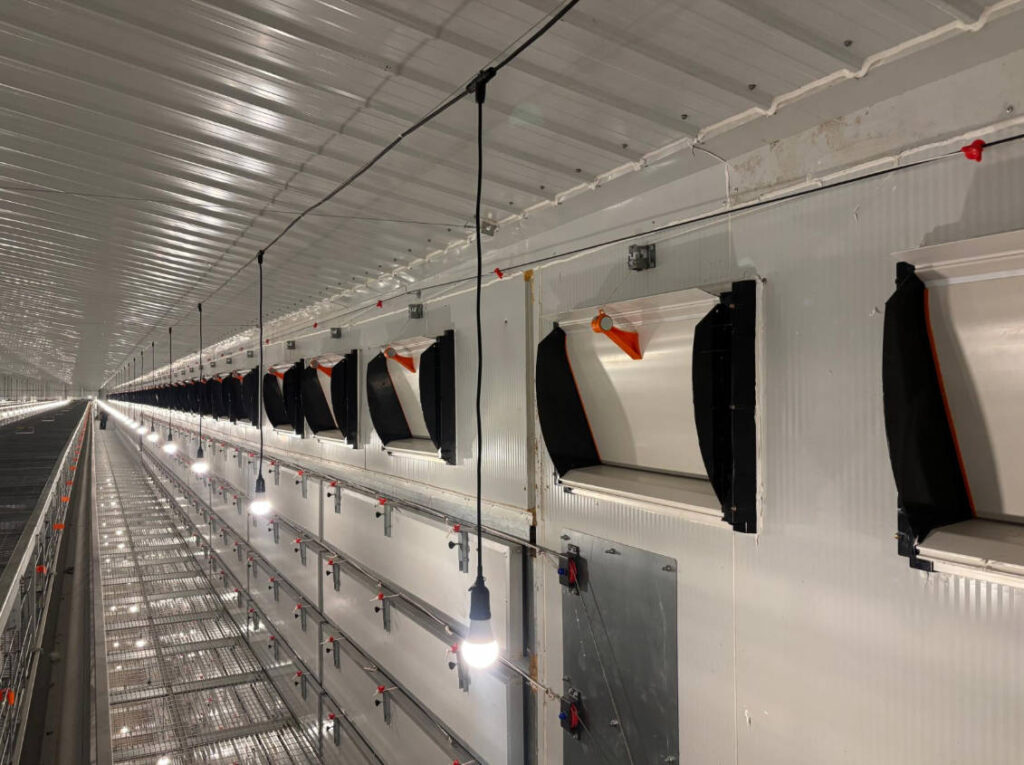
At ZEUSYANG, we design ventilation for the specific house size, flock, climate, inlets, and leakage information and match appropriate equipment with utilities and objectives. In addition to matching push-pull fans with cooling pads and air guides, the system includes controls and monitors to verify the final calculated airflow based on project verification.
What Can Our Push-Pull Fan and Control Package Include?
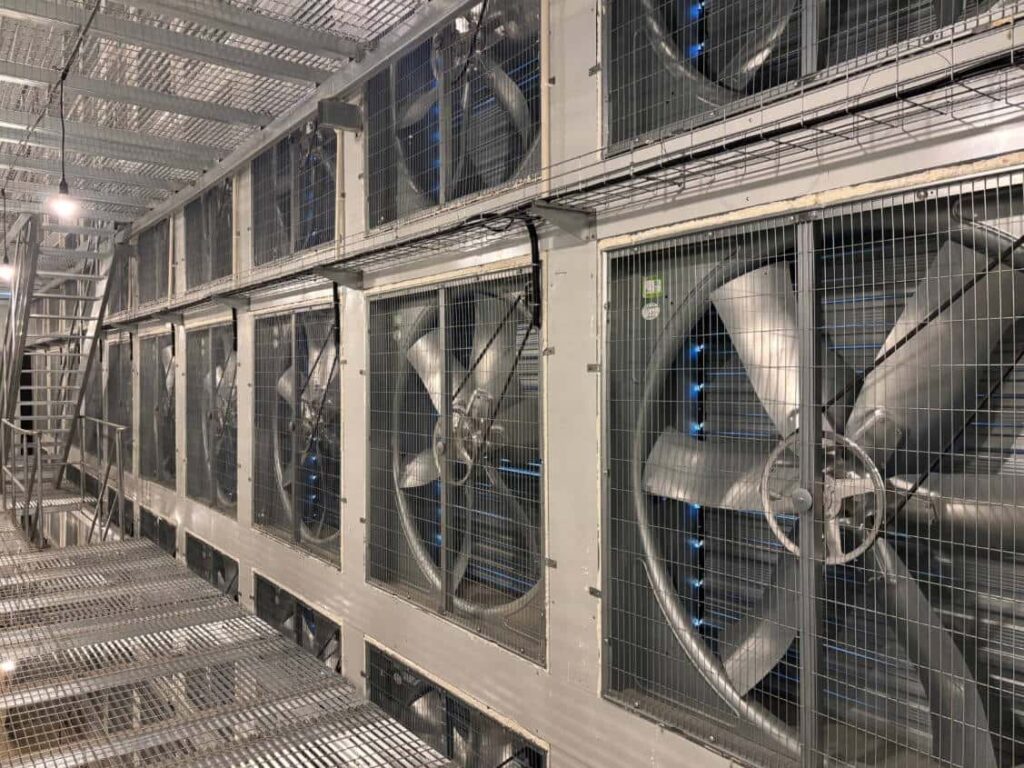
We can supply our push-pull fan construction with galvanized fan plates, dynamically balanced stainless steel fan blades, a strengthened push-pull mechanism and auto shutters. Additional project modules are available such as environmental control cabinets, cooling pads and air-guidance plates.
At ZEUSYANG, we tie these elements together with the house description and the chosen operating strategy. One fan count and one controller setting will not be sufficient for all floor-house systems.
Which Project Data Do We Need Before Sizing?
Provide house dimensions; bird species, age and number at each production stage; design weather; insulation; inlet and leakage information; and the internal layout of feeders and drinkers. Also include power and backup arrangements, existing fan details, obstructions near openings, signs of moisture damage and a list of current problems.
For floor housing, information about water-lines and litter-management is important because a leak cannot be fixed by ventilation.
FAQ
Q: Can Deep Litter Ventilation Airflow Be Specified Only by Bird Count?
A: Bird load is one influencing factor, but many other elements also affect the calculation, including the age of the poultry house, ambient weather, house geometry, house insulation, air leakage, air inlet configuration, and internal resistance, among others. Operating objectives also play a significant role in the calculation.
Q: Does more deep litter ventilation airflow always solve wet litter?
A: No, wet litter is usually caused by a leak or excess pressure somewhere, or possibly the height of the drinker, inadequate drainage, poor distribution or management. Don’t change the fan speed until you find the source of the moisture.
Q: Should ventilation run in cool weather?
A: While some minimum air movement is required for management of moisture and air quality, the rate and cycle can be determined for the flock, house and climate.
Q: What should a buyer send ZEUSYANG for a ventilation proposal?
A: Send us at ZEUSYANG the house drawings, flock details, climate data, inlet and equipment layout, power and backup information, current ventilation equipment, observed problems and required delivery scope.