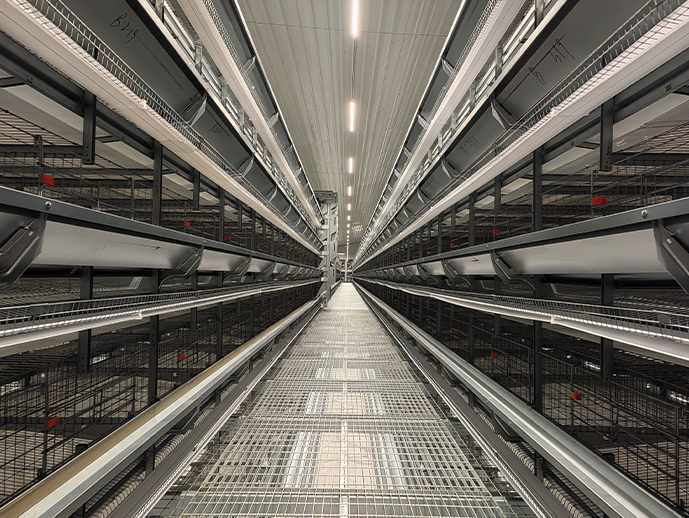

A 50,000-hen house needs more than a list of machines. Hens must move between nests, feed, water, perches and litter areas, while eggs and manure take separate routes out of the building. That is the practical job of a cage-free egg production system: connect the bird-flow plan with feeding, drinking, climate control, collection and daily maintenance.
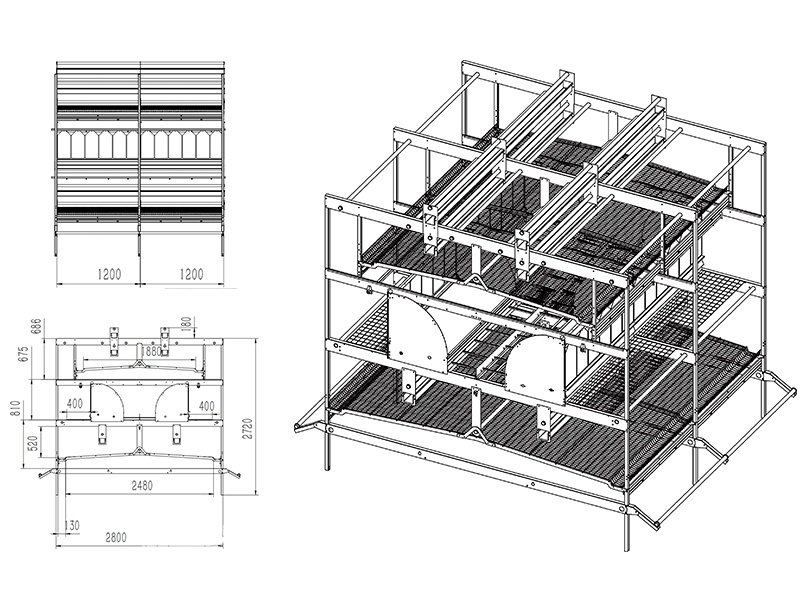
The Multi-Tier Welfare Layer System is arranged as an open, door-free layout. At ZEUSYANG, we plan the upper and lower activity areas, perches and litter or ground space around normal bird movement, while the nest area stays quieter with soft pads and curtains. Chain feeding lines, separate drinking lines, egg belts and manure belts follow that same flow. The final row count and house size still have to be calculated from the site drawing, welfare standard and flock plan.
What Equipment Does a 50,000-Hen Cage-Free Egg Production System Need?
Start with the route a bird takes through the house. The equipment package normally includes:
- Open multi-tier frames, ramps, platforms, perches and protected activity areas.
- Community nest boxes with soft nesting pads and curtains, separated from the main activity area.
- Feed storage, conveying equipment, hoppers and chain feeding lines on the working levels.
- Separate nipple drinking lines with filtration, pressure regulation, flushing and leak alarms where specified.
- Longitudinal egg belts, end transfer or elevator equipment, and a cross-house conveyor to the egg room.
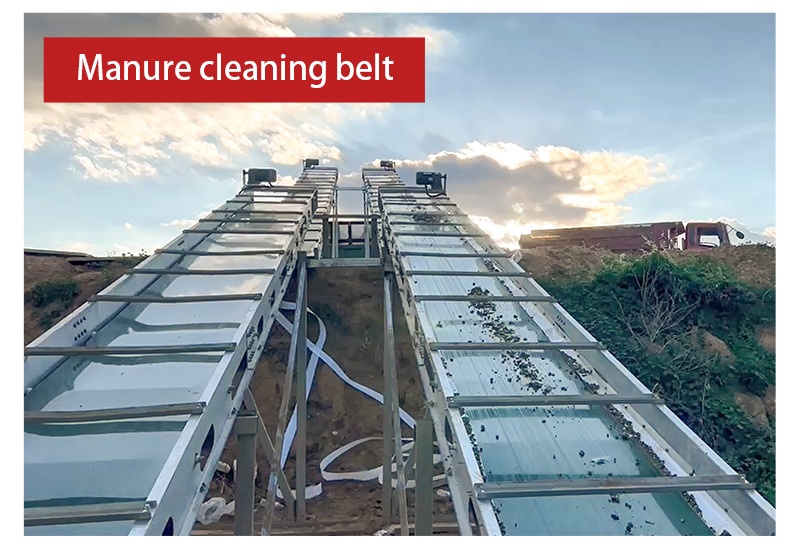
- Manure belts and transfer conveyors leading to the farm’s storage, treatment or loading point.
- Fans, air inlets, cooling or heating equipment, lighting, sensors, electrical cabinets and the control computer.
The ground section can also use a slat floor. For this part, we normally look at polypropylene, ABS or PVC slats with adjustable supports. That keeps the floor drier and lets manure fall through for easier cleaning. The exact slat pattern and load calculation belong in the project drawing. Buyers can compare the feed module on the cage-free feeding system page.
How Should Cage-Free Layer System Materials and Anti-Corrosion Protection Be Chosen?
Do not ask for one generic “anti-rust” statement. The frame, mesh, fasteners, feed troughs, nest parts, egg belts and manure belts see different loads and cleaning conditions. In a typical poultry-equipment package, the main steel parts use hot-dip galvanizing, while several structural components are specified with 275 g/m2 hot-dip galvanized sheet or wire. Confirm those figures on the final bill of materials for the welfare system rather than copying them from a different cage product.
Tell the supplier if the site is coastal, very humid, cold, or washed with aggressive chemicals. Check coating coverage after forming and welding, edge treatment, fastener material, belt replacement access and the way plastic nest or slat parts can be changed. A component-by-component material schedule is more useful than a “heavy-duty” label.
How Do Feeding, Drinking, Lighting and Ventilation Work Together?
Automatic Poultry Feeding and Drinking System Configuration
Feed should travel from the silo or storage hopper to the conveying line, then into hoppers and chain lines on each working level. Our chain feeding lines can be protected with perch guards. Set line height and feed depth so birds can reach feed without crowding at one end. The quotation should state the number of lines, motor arrangement, control mode and inspection points.
Keep drinking lines separate from feeding zones. For ground feeding, the water package can include double filtration, a secondary pressure regulator, flushing and dosing functions, plus a fully suspended line that can be lifted. For a cage-free house, water pressure must be stable, nipples must not drip onto litter, and the operator needs a simple way to flush and isolate a line. See the site’s poultry drinking system guide for the water-side checklist.
Poultry Lighting and Ventilation Coordination
Light changes can help pullets find the nests and return to the correct activity level. Ventilation has to remove heat, moisture and ammonia without making a strong draft at bird height. The fan package can be specified with hot-dip galvanized panels, balanced stainless-steel blades and automatic shutters. Confirm the final materials in the equipment schedule so they match the local climate and cleaning method. Commission fans, inlets, cooling pads or heaters, humidity and temperature sensors, and lighting timers as one system.
What Does the Electrical Cabinet and Computer Control System Manage?
List each controlled load before the cabinet is built: feed motors, water alarms, nest opening and closing, egg belts, manure belts, fans, cooling, lighting zones, sensors and fault alarms. The environmental controller can collect temperature, humidity and harmful-gas readings and adjust ventilation equipment against preset conditions. Remote access or farm software is not automatic in every package, so list those functions in the quotation if they are needed.
What Affects Broken Eggs, and How Do Egg and Manure Conveyors Work?
How to Reduce Broken and Floor Eggs
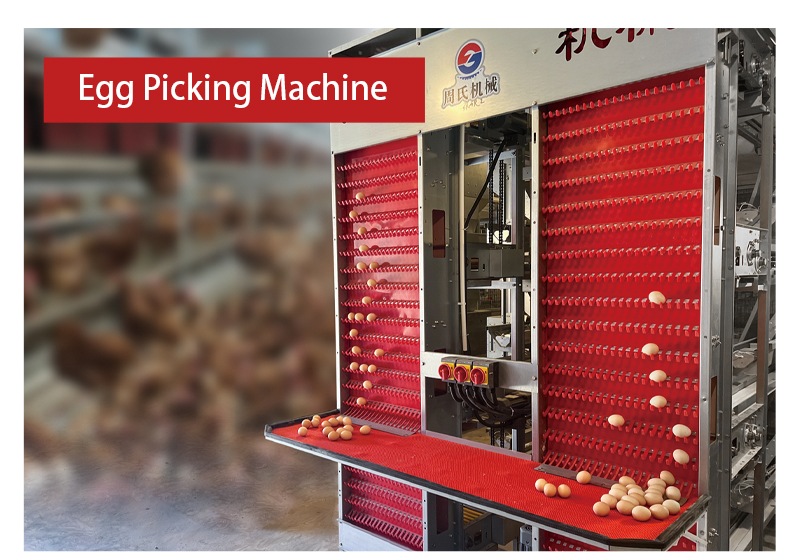
Most breakage problems show up at the edges of the system: hens lay outside the nest, nest pads are worn, a belt is out of line, a transfer is too high, eggs meet at a sharp turn, or collection starts after eggs have crowded together. Train pullets to use the nests, keep the nesting area calm and clean, check belt tension and alignment, and inspect every transfer during commissioning. The elevator-type collection unit is designed for stable, low-noise transfer and can be fitted with a soft-egg filter. A quoted capacity of 10,000-12,000 eggs per row per hour is a product reference; the actual result still depends on the row layout and transfer design.
Separate Clean and Dirty Workflows
Eggs roll from the nest onto a longitudinal belt, pass to an end transfer or elevator, then move along a cross conveyor to grading or packing. Manure drops to belts under the working levels and travels to an end conveyor and the approved outside storage or treatment route. Keep these paths separate: the egg room should not share wash-down routes or vehicle traffic with manure handling. The automatic egg collection equipment page is a useful reference for the transfer section.
What Is the Workflow From Design to On-Site Installation?
Design, Production, Packing and Transport
In our project-planning workflow, the job moves through site and utility review, a preliminary layout, confirmation of bird, egg and manure routes, final drawings and bill of materials, factory production and inspection, labelled packing, shipping, installation, wiring, testing and training. At ZEUSYANG, our project-planning sequence covers design, manufacturing, transportation, installation guidance and after-sales support. Long frames, belts, motors, cabinets and wear parts need package labels that match the house and row numbers. Confirm container loading, port documents, unloading space and protection from rain before the first shipment leaves.
When Can Installation Finish in About One Month?
A one-month target is possible only as a conditional project schedule. The building and floor must be ready; drawings, embedded parts and the bill of materials must be frozen; all equipment must be on site and sorted; power and water must be available; local installers, lifting tools and electrical supervision must be assigned; and daily acceptance checks must be agreed. Customs delays, civil-work changes, missing parts or unsafe weather can extend the work. Put these assumptions in the quotation instead of promising a fixed date.
FAQ
Q: What Is Included in the ZEUSYANG Multi-Tier Welfare Layer System?
A: The equipment scope can include open multi-tier frames, ramps, perches, community nests, chain feeding lines, nipple drinking lines, egg belts and manure belts. Fans, lighting, sensors, electrical cabinets and the control computer are coordinated around the house layout. The confirmed quotation should list every included module and keep optional items separate.
Q: Can a Multi-Tier Welfare Layer System Fit an Existing Poultry House?
A: It can, but the internal length, width, clear height, columns, floor condition, ventilation, power, water and egg and manure exits must be checked first. ZEUSYANG uses those measurements to set the row count, aisle width and equipment routes. An existing house that limits bird movement or service access may need civil or ventilation changes before installation.
Q: How Is an Automatic Poultry Feeding System Configured for Cage-Free Layers?
A: An automatic poultry feeding system normally moves feed from the silo or storage hopper through conveying equipment to hoppers and chain lines on each working level. The quotation should confirm the number of lines, motor arrangement, feed-depth adjustment, perch guards, control mode and inspection access. Final settings depend on the house layout and bird distribution.
Q: How Does a Poultry Drinking System Work in a Cage-Free Egg Production System?
A: A poultry drinking system for a cage-free egg production system needs stable pressure, filtration, flushing and easy line isolation. Dosing and leak alarms can be included where required. The drinking lines should stay clear of litter wetting and remain accessible for cleaning, nipple checks and height adjustment as the flock develops.
Q: How Does Automatic Egg Collection Equipment Connect to a Cage-Free Layer System?
A: Automatic egg collection equipment links the longitudinal nest belts to an end transfer or elevator and then to a cross conveyor leading to the egg room. Transfer height, curve design, belt alignment and speed matching all affect breakage. For a cage-free layer system quotation, the supplier should show each transfer point and state the planned capacity for the final layout.