
What Is Semi-Automatic Poultry Farming Equipment?
Which Farm Operations Are Usually Automated?
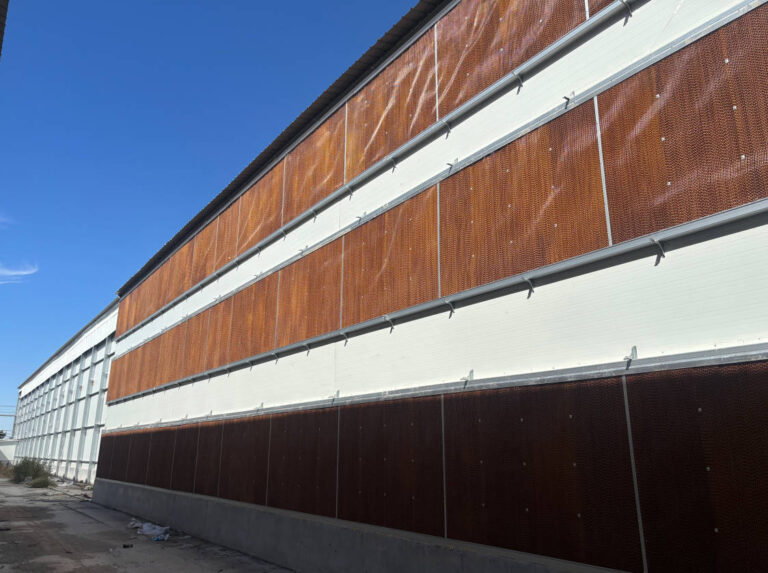
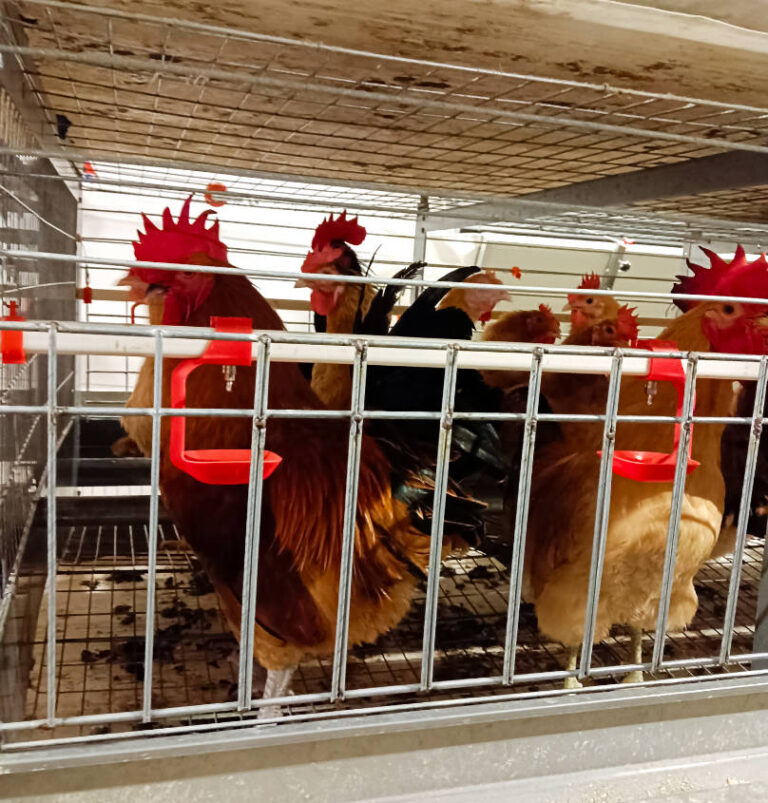
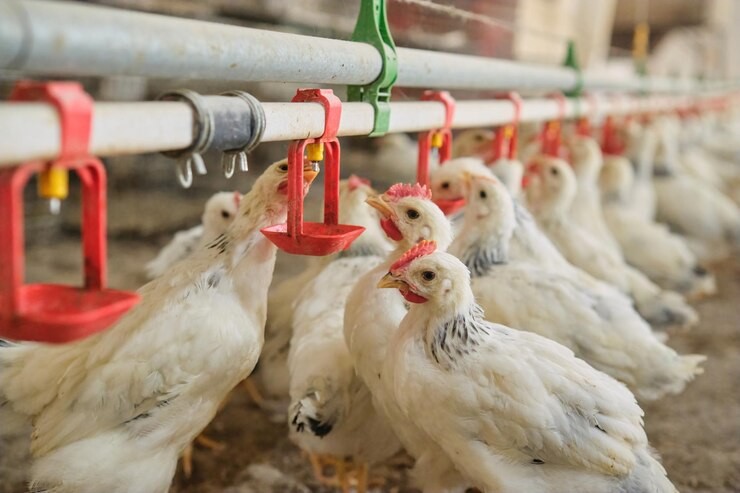
Semi-automatic poultry farming equipment combines mechanical assistance with regular manual work. A farm may use nipple drinking lines, feed carts, basic fans, cooling equipment, and a simple chicken cage system while workers still complete many daily tasks.
The configuration depends on flock size, house layout, power supply, and budget. Farmers should also consider whether the selected cage system can support future expansion and automation upgrades.
Which Tasks Still Require Farm Workers?
Workers may collect eggs, handle manure, inspect drinkers, record temperatures, and operate separate fans. Semi-automatic systems remain practical because they require less capital and allow phased upgrades.
How Does Fully Automatic Poultry Farming Equipment Work?
What Systems Can Be Integrated into a Fully Automatic Farm?
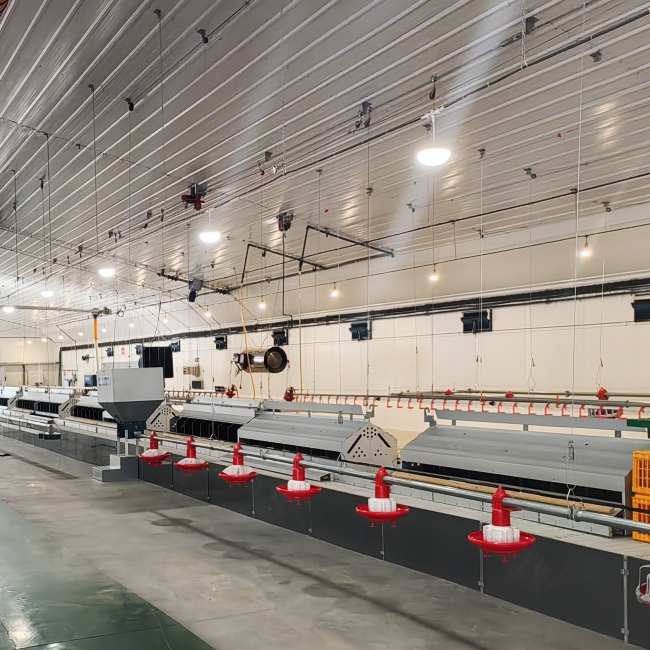
A fully automatic farm can connect feeding, drinking, egg collection, manure removal, lighting, ventilation, cooling, environmental control, alarms, and monitoring. ZEUSYANG’s complete solutions combine cage systems with automatic feeding, drinking water, manure cleaning, ventilation, and intelligent controls.
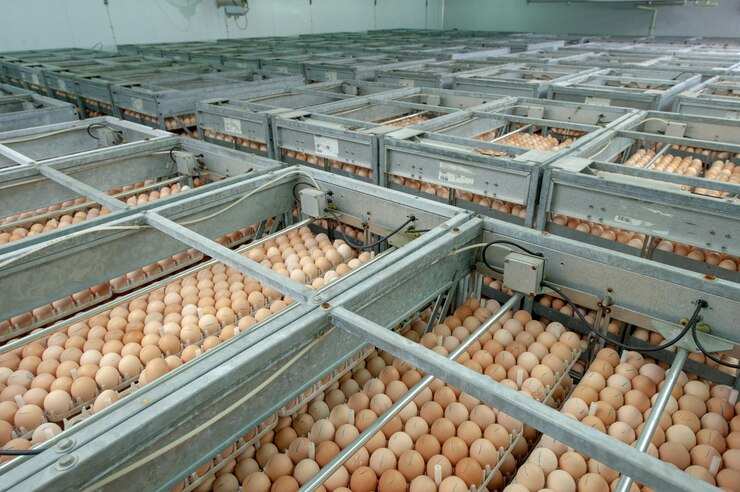
In an automatic layer cage system, eggs move from each tier to an egg belt and then to an egg collector machine or central line. Our elevator egg collection system is designed for stable, low-noise operation and includes a soft-shell egg filter. Its normal collection range is 10,000–12,000 eggs per row per hour, with a stated maximum of 19,000 eggs.
How Does Automation Improve Daily Farm Management?
Automation reduces repeated feeding, egg carrying, manure cleaning, and fan adjustment, allowing managers to focus on flock condition, biosecurity, maintenance, and records. This is especially useful for automated egg producers managing large poultry houses.
Automatic vs Semi-Automatic Poultry Farming Equipment: What Costs More?
What Is Included in the Initial Equipment Cost?
Fully automatic poultry farming equipment normally requires a higher initial investment because it involves a more integrated equipment configuration and a higher level of automation. The final cost depends on farm capacity, available land, poultry-house layout, cage type, automation level, and specific project requirements.
The cage structure also affects the investment. An H-type stacked system uses vertical space efficiently but requires a closed poultry house and dependable environmental control. ZEUSYANG’s large stacked layer system can be configured from 4 to 12 tiers and integrates feeding, manure cleaning, egg collection, and climate control.
Which Hidden Costs Should Be Included in the Budget?
A realistic budget should include freight, building modification, backup power, wiring, spare parts, training, maintenance, electricity, and future expansion. Ventilation is also essential rather than an optional accessory.
Our poultry-house fans use hot-dip galvanized sheet, dynamically balanced stainless-steel blades, automatic shutters, corrosion-resistant guide rods, and individually inspected components. These design details are intended to support stable airflow, durability, and efficient operation in poultry-house environments.
Is Lower-Cost Equipment Always More Economical?
A lower purchase price may lead to higher labor costs, more egg handling, slower manure removal, or limited expansion.
ROI should consider initial investment, annual labor, electricity, maintenance, production losses, and expected equipment life across several production cycles. A farm should compare total ownership cost rather than choosing poultry farming equipment only by its purchase price.
How Much Labor Can Automatic Poultry Equipment Save?
Where Does Semi-Automatic Equipment Still Depend on Labor?
Semi-automatic farms often need workers to transfer eggs, inspect feed levels, operate manure equipment, record environmental conditions, and move between poultry houses. These repeated tasks become more expensive as the flock size increases.
Manual work may also create differences between shifts. One worker may distribute feed, inspect drinkers, or operate ventilation equipment differently from another. Such variations can make production management less predictable.
Which Jobs Can Full Automation Reduce?
Full automation can reduce feed delivery, egg transportation, manure removal, environmental recording, and manual fan adjustment. Staff is still needed for flock inspection, sanitation, maintenance, alarm response, and farm management.
Labor savings depend on equipment layout and operating discipline. A poorly planned automatic line can create bottlenecks, while a coordinated system can allow a smaller team to manage more birds consistently.
For large layer farms, automatic manure belts and egg transportation lines can remove some of the most repetitive daily jobs. The savings become more significant when local wages are high or experienced farm workers are difficult to recruit.
Which System Delivers Better Production Efficiency?
How Do Feeding, Drinking, and Egg Collection Affect Efficiency?
Consistent feeding and reliable drinking help stabilize daily management. Automatic egg belts reduce carrying distance and repeated handling.
Our multi-tier welfare system uses separate feeding and drinking zones, automatic egg belts, centralized collection options, and manure belts that transport waste outside the poultry house. The system also includes laying, resting, activity, and sand-bathing areas to support different management and welfare needs.
Efficiency does not guarantee a fixed production increase. Genetics, feed quality, flock health, stocking density, climate, and daily management still affect results.
Can Environmental Control Improve Farm Consistency?
Fans, cooling systems, air inlets, sensors, and environmental controllers create a more predictable poultry-house environment.
In our stacked layer equipment, the controller can collect temperature, humidity, and harmful-gas data. It can then adjust ventilation methods, air-inlet openings, and the number or position of operating exhaust fans according to preset environmental standards.
This reduces the need for workers to make every adjustment manually and helps maintain more consistent operating conditions.
Which Poultry Farming Equipment Is Right for Your Farm?
When Should You Choose a Semi-Automatic System?
Choose semi-automatic equipment when budgets are limited, labor is affordable, expansion is gradual, or power and technical support are uncertain.
It may also suit small and medium-sized farms whose managers prefer simpler controls. The equipment can be installed in stages, allowing the farm to add egg collection, manure removal, or environmental control when production capacity grows.
When Should You Choose a Fully Automatic System?
Fully automatic systems are generally more suitable for large commercial farms where labor costs are high, centralized environmental control is required, or multi-tier housing is used. They can reduce repetitive manual work and improve space utilization, but they also require reliable power, environmental control, technical support, and strict biosecurity management.
Can a Semi-Automatic Farm Be Upgraded Later?
Yes, but the first-stage design should reserve space, electrical capacity, control interfaces, and transportation routes.
Before selecting among different types of cages, confirm that future feeding, egg collection, manure removal, ventilation, and monitoring equipment will be compatible. Poor compatibility may make later upgrades more expensive than installing a coordinated system from the beginning.
ZEUSYANG Poultry Farming Equipment and Customized Farm Solutions
What Poultry Equipment Do We Provide?
At ZEUSYANG, we manufacture H-type and A-type layer systems, broiler cages, pullet-rearing systems, breeder systems, floor-rearing equipment, feeding lines, drinking systems, egg collection equipment, manure removal systems, environmental controllers, and intelligent monitoring equipment. Our products can support laying hens, broilers, pullets, and breeders, from individual poultry houses to complete commercial farming projects.
How Do We Support Different Automation Budgets?
We design solutions around poultry type, farm capacity, available land, local climate, labor cost, management level, and investment budget.
Our services can cover farm layout planning, poultry-house design, cage selection, steel-structure construction, equipment installation guidance, commissioning, and after-sales technical support. We can support either phased semi-automatic upgrades or fully automatic projects.
FAQ
Q: How much does poultry farming equipment cost?
A: The final price relies on several key factors. These include your poultry type and the overall flock size. We also look at the available land and your poultry-house dimensions. Your chosen cage configuration and automation level matter as well. Finally, we must consider any specific project requirements. Every farm needs a unique layout. The equipment setup will also vary from place to place. Because of this, we cannot just use a set list of parts. Instead, we build a precise quote using your complete project plan.
Q: What equipment is needed for a modern poultry farm?
A: Equipment needs change based on several factors. These include the poultry type, flock size, and available land. The poultry-house layout, cage system, and chosen automation level also matter. A full project often brings together many different setups. For instance, it might include feeding, drinking, and environmental control systems. Manure management, egg handling, monitoring, and safety systems are also key parts. Because of this, you must plan the final setup to match the exact needs of your specific farm.
Q: Is automatic poultry farming equipment worth the investment?
A: Automatic poultry farming equipment can offer a solid return on investment. This happens if the money saved on workers covers the higher upfront costs. Furthermore, the machines keep daily tasks steady and boost your overall output. Over time, managing the site becomes much easier. These benefits often make the initial price worthwhile. How fast you get your money back varies. It relies heavily on local wages and power bills. The total size of your operation matters too. In addition, you must consider repair fees and how long the machines last. Finally, the daily success of your farm plays a major role in this timeline.